
A successful equipment move is planned at the job site before the haul begins. For heavy equipment transport Liberty County contractors and equipment owners need to account for the machine, its attachments, site access, and dispatch details, not just the distance between locations.
A clear plan helps prevent avoidable confusion about what is moving, where it needs to go, and what could affect loading or arrival. JTT Towing and Storage is a family-owned business based in Dayton, with more than 10 years of experience providing equipment and materials hauling in the area.
This guide explains how to prepare machinery and attachments, share useful load and site information, and coordinate pickup and delivery. You’ll also learn why route and access planning matter in Liberty County, so you can organize the move with fewer surprises and keep your project on track.
Key Takeaways
- Plan for the equipment’s condition and destination readiness so it can be put to work after delivery.
- Share the machine’s dimensions, weight, configuration, and operating condition to help shape the transport plan.
- For heavy equipment transport Liberty County, compare options by equipment fit, coordination, communication, and service scope.
- Distinguish planned hauling from recovery: disabled, stuck, or incident-involved machinery may need a different approach.
- Gather pickup and delivery addresses, access notes, timing needs, and site contacts before dispatch. JTT provides equipment and materials hauling from Dayton.
Why Heavy Equipment Transport in Liberty County Depends on Good Coordination
Machinery needs to arrive ready for its next job, not simply leave the last site. A move can lose time when equipment details are incomplete, the pickup area is difficult to access, or the destination isn’t ready to receive the load. Planning heavy equipment transport Liberty County projects means coordinating the full handoff, from the machine’s condition and loading area to the schedule and site contacts.
Start with the equipment’s operating condition. A machine that moves under its own power presents different loading considerations from one that cannot move. Type, dimensions, weight, configuration, and attachments also help define the job. The types of heavy equipment used in construction and industry vary widely, so details about the specific machine are more useful than a broad label such as “equipment.”
Equipment hauling and heavy-duty towing address different situations. Hauling is planned around moving equipment or materials between job sites or facilities. Heavy-duty towing and recovery are relevant when a vehicle or piece of equipment is disabled, stuck, or involved in an incident. JTT provides equipment and materials hauling as well as heavy-duty towing and recovery. The Dayton towing guide offers related context on towing support, while this section focuses on coordinating a planned equipment move.
- Share the equipment’s operating condition and identify any attachments traveling with it.
- Prepare both pickup and delivery sites for access, loading, and arrival.
- Set a preferred time and identify a contact at each location.
What information helps plan a Liberty County equipment move?
Gather the equipment type, approximate dimensions and weight, configuration, and operating condition. Include pickup and delivery addresses, preferred timing, and site contacts who can explain access or staging needs. Note whether attachments are traveling with the machine. These details give JTT a practical basis for coordinating the hauling plan and reduce uncertainty before dispatch.
Why local site conditions matter around Dayton and Cleveland
Sites around Dayton, Cleveland, and Liberty can differ, so don’t assume one route or job-site setup will suit every move. Consider rural access, turning space, ground conditions, and where equipment can be staged without disrupting work. Weather may affect ground firmness or access, too. Share these observations early so the transport plan reflects the pickup and delivery locations.
Local landmarks help orient a move, but each site still needs its own access plan. A delivery point with limited turning room may require a different approach from an open industrial yard. Confirm that the destination has a clear receiving area and that the site contact knows when to expect the equipment. Based in Dayton, JTT Towing and Storage serves customers in its local coverage area and coordinates equipment and materials moves around the information provided for each job.
How Equipment, Attachments, and Site Access Shape the Transport Plan
A transport plan starts with the specific machine, not a general category. Dimensions, weight, configuration, and operating condition all affect how a move is organized. A compact machine with detachable components raises different planning questions from a larger unit with fixed attachments. Share the details you have rather than assuming a model name alone describes the load.
Separate general planning steps from requirements that depend on the equipment or route. Checking entrance width and unloading space is useful for any site. The appropriate transport setup, securement approach, and permit considerations depend on the actual load and current rules. Dimensions and weight can matter for regulatory planning; consult the Texas oversize/overweight permits guidance for current state information. Don’t assume one machine’s requirements apply to another.
Site details can change the plan even when equipment information is complete. Narrow entrances, tight turns, soft ground, overhead clearance, or limited staging space may affect vehicle access and where loading or unloading can happen. Flag potential constraints early and coordinate with site contacts and the project team so the work areas are ready.
Prepare machinery and attachments before dispatch
Make an inventory of attachments, loose components, and parts that may need separate handling. Describe whether the machine operates and can move under its own power, and note any condition that could affect loading. Photos can help show the machine’s configuration. Backhoes have their own preparation considerations, so use the backhoe transport guide for machine-specific details rather than applying them to every equipment type.
- List the machine and each attachment moving with it.
- Identify loose items or components that need separate handling.
- Describe operating condition and any known access or loading concerns.
Check pickup and delivery access in Liberty County
Review both locations before dispatch. Consider entrance width, turning room, overhead clearance, ground firmness, and space to stage or unload. In parts of Liberty County near the Trinity Basin, terrain and ground conditions are useful planning considerations, especially if weather has affected the site. Compare notes with site contacts and project teams because conditions can differ between pickup and delivery.
Make access notes specific: identify the intended entrance, describe tight turns or soft areas, and say where the equipment can wait without interfering with work. These details also help coordinate the arrival with the people receiving the load. For a move that includes equipment or materials, JTT’s equipment and materials hauling can be part of a coordinated project plan.
How to Compare Heavy Equipment Transport Options for a Local Job
The right option depends on what needs to move and why. Relocating an operating machine calls for a different service approach from moving materials or responding to equipment that is stuck or disabled. For heavy equipment transport Liberty County projects, compare the practical needs of the job rather than relying on a broad service label.
Use these criteria to organize the comparison:
- Equipment fit: Is the service intended for the machinery or materials being moved, and have you provided accurate details about the load?
- Site coordination: Can pickup and delivery access, staging, and site contacts be included in the plan?
- Communication: Is there a clear way to share timing needs, access notes, and changes with the people involved?
- Service scope: Does the job call for equipment hauling, materials hauling, heavy-duty towing, or recovery?
These criteria help you describe the job clearly. A contractor relocating an operating machine between project sites needs planned hauling. A load of materials going to a work area has different contents and handling considerations. A vehicle or machine that cannot move, is stuck, or has been involved in an incident may need towing or recovery instead.
When equipment hauling differs from heavy-duty towing
Equipment hauling is arranged for a planned move from one location to another. Heavy-duty towing and recovery address disabled or compromised assets, including equipment that is stuck or involved in an incident. The machine’s condition and the circumstances determine which category best describes the need. JTT provides heavy-duty towing and recovery for situations that call for that support.
Keep the distinction clear when describing the job. “Move an operating machine to another site” communicates planned hauling. “Recover a disabled unit from a work area” points to a recovery need. For commercial and industrial projects, JTT provides equipment and materials hauling as well as heavy-duty towing and recovery for these different types of work.
What makes a transport plan fit the project?
A suitable plan accounts for the requested schedule, machinery details, pickup and delivery access, and coordination requirements. It also identifies who will be present at each site and how the site contact can communicate access instructions or changes. These details help align the service with the actual task instead of treating every move as identical.
Before discussing the project, outline what is moving, its condition, where it needs to go, and any known site constraints. Identify the contact responsible for receiving the equipment or materials and note the preferred timing. JTT Towing and Storage is based in Dayton and provides hauling for customers in its local coverage area. Sharing the job details gives the conversation a clear starting point and helps align the hauling plan with project needs.
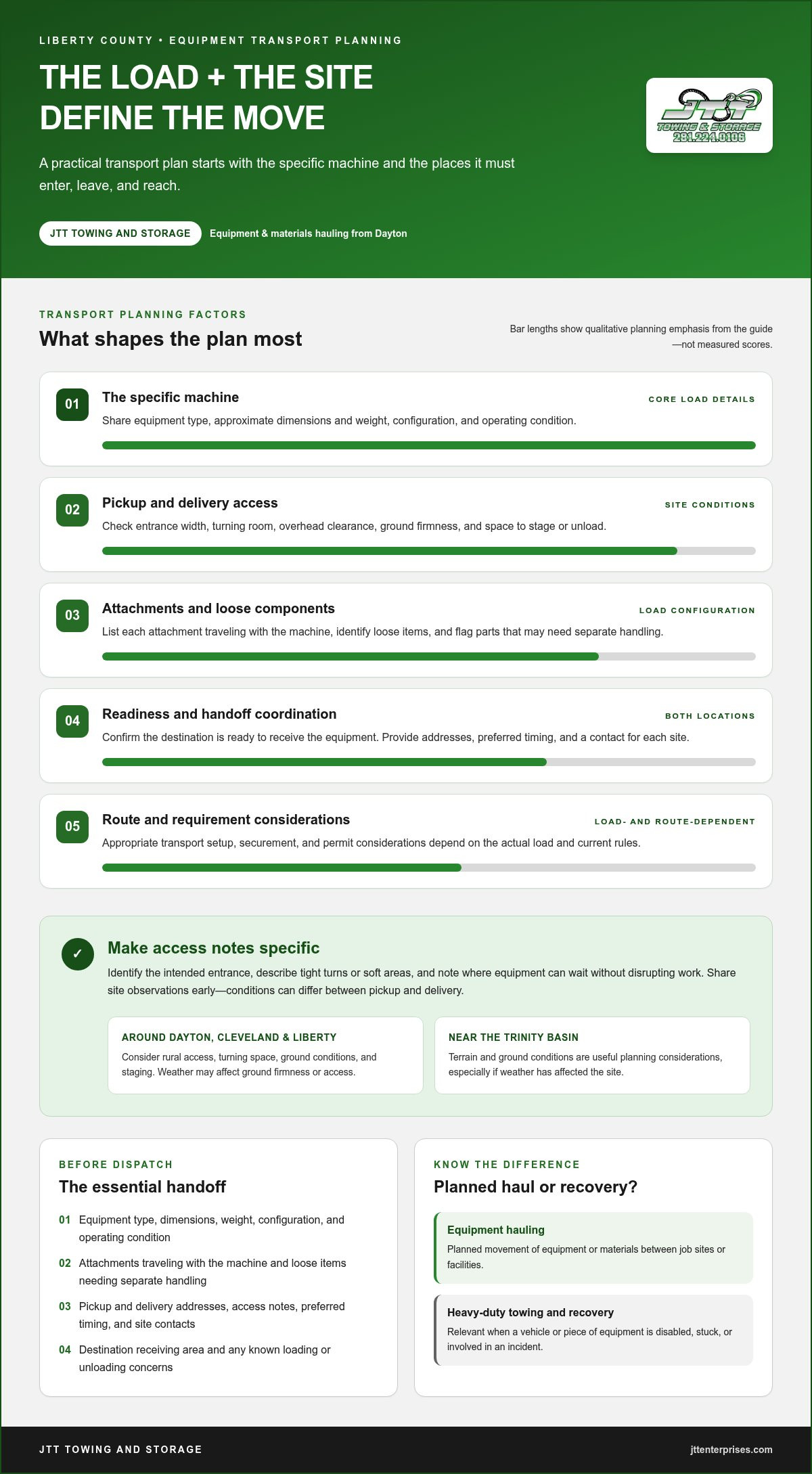
A Pre-Dispatch Checklist for Heavy Equipment Transport in Liberty County
A useful pre-dispatch checklist turns a transport request into a clear job plan. Gather the load details, then work through pickup and delivery arrangements with the people responsible at each site. For heavy equipment transport Liberty County projects, this preparation helps JTT coordinate around the equipment and actual site conditions.
- Identify the equipment. Record the machine type, approximate dimensions and weight, configuration, and operating condition. Say whether it can move under its own power, and describe anything that may affect loading or handling.
- List attachments and components. Note which attachments are traveling with the machine, along with loose parts or items that may need separate handling. This gives the team a clearer picture of what the move includes.
- Provide both addresses. Share the full pickup and delivery locations, including useful directions to the work areas. Include any designated entrance or staging point.
- Describe access and ground conditions. Flag narrow entrances, limited turning room, overhead obstructions, soft ground, or restricted staging space. Mention known conditions that could affect loading or unloading.
- Set timing and contacts. Provide preferred timing and identify a responsible contact at both ends of the move. Share how each person can be reached and who can authorize access or communicate site changes.
- Review transport requirements. Load dimensions, weight, and route details may affect applicable requirements. Verify current TxDOT guidance for the specific move rather than relying on assumptions or requirements for another load.
Information to have ready before arranging transport
Keep the details together in one message or job record. Include equipment type, approximate dimensions and weight, attachments, operating condition, pickup and destination addresses, preferred schedule, site contacts, and access notes. Label any estimated measurements as estimates. Organized information helps JTT coordinate an equipment and materials hauling plan for the project.
Coordinate the job site for pickup and delivery
Before the scheduled move, make sure the responsible person can provide access at both locations. Clear or coordinate the areas needed for loading, unloading, and positioning the equipment. Let the site team know where the work will happen so personnel, parked vehicles, and materials don’t block the staging area. Backhoe moves can involve machine-specific preparation, so use the Liberty County backhoe guide for details focused on that equipment.
Review the checklist again if a site contact, access point, equipment condition, or timing need changes. Sharing updates before dispatch helps everyone work from the same plan. To coordinate equipment or materials hauling for your project, share your move details with JTT.
Arrange Heavy Equipment Transport with JTT in Liberty County
Commercial and industrial moves are easier to coordinate when the transport plan reflects the actual equipment and job-site conditions. JTT Towing and Storage provides equipment and materials hauling for customers across its local coverage area. Based in Dayton, Texas, JTT supports contractors and equipment owners planning a move in Liberty County.
For heavy equipment transport Liberty County projects, start with a clear description of the work. A planned move between job sites differs from hauling materials to a project or coordinating around a machine that can’t operate. Explaining the purpose of the move helps establish the right service scope and keeps the conversation focused on practical needs.
What to expect when coordinating a move with JTT
Project details guide coordination. Describe the equipment or materials, pickup and delivery locations, machine condition, and any known access limitations. Include preferred timing and contact information for the people responsible at both sites. JTT uses these details to coordinate the hauling plan around the job. Equipment and materials hauling supports commercial and industrial moves, with planning shaped by the specific project rather than assumptions about the load.
Clear communication matters throughout planning. If the equipment’s condition changes, the pickup entrance differs from what was expected, or the receiving area needs a particular arrangement, share that information with the project contacts. For staging needs, identify where the equipment or materials will wait and who is responsible for access. If you’re coordinating vehicle staging or storage as part of broader site logistics, the commercial vehicle storage article may offer useful related information.
Take the next step for a Liberty County equipment move
Before getting in touch, bring together the details that describe the job: equipment type and condition, attachments or materials included, pickup and delivery addresses, site access notes, and preferred timing. You don’t need to create a technical transport plan. A straightforward description gives JTT a useful starting point for discussing how equipment and materials hauling can fit your project.
JTT is family-owned and operated, has been established for more than 10 years, and is based in Dayton. Contractors and equipment owners in its local coverage area can discuss equipment transport needs with JTT and share the information needed to plan the next step.
Make the Equipment Move Part of Your Project Plan
Give transport its own milestone in the project schedule. Crews may depend on the equipment before they can begin their next task, so assign one person to coordinate schedule updates and keep the receiving team informed if site plans change.
That clear ownership can make heavy equipment transport Liberty County projects easier to manage alongside other work. Treat delivery as a handoff between teams: confirm who will receive the machine and what work follows. This connects transport coordination to the larger job instead of treating it as a separate task.
JTT Towing and Storage provides equipment and materials hauling for commercial and industrial moves. Share the project’s needs and discuss a practical plan with the team. Discuss your equipment transport needs with JTT to take the next step toward a well-coordinated move.
Frequently Asked Questions
What information do I need to arrange heavy equipment transport in Liberty County?
Have the equipment’s make or type, approximate dimensions and weight, operating status, and details of any attachments ready. You’ll also need pickup and delivery addresses, preferred timing, and the names of the people coordinating access at each site. If the move involves several machines or materials, identify each separately. This makes it easier to describe the job and distinguish the main load from additional items.
Can heavy equipment be transported if it is not operational?
Yes, non-operational equipment may still be moved, but its condition affects the approach. Explain whether it starts, rolls, steers, or has damage that could affect loading. A machine that cannot move under its own power presents different handling needs from one that runs but has a steering issue. JTT provides equipment hauling as well as heavy-duty towing and recovery for disabled or compromised equipment situations.
How do I prepare equipment and attachments for transport?
Identify every attachment and loose component included in the move. Secure or separate items according to the equipment’s requirements, and note parts that need special handling. Remove personal or job-site materials that aren’t part of the load. If an attachment changes the machine’s configuration, include that detail. For example, report whether a bucket, blade, or other implement is attached or traveling separately.
Do heavy equipment moves in Liberty County require TxDOT permits?
Some moves may require permits, but requirements depend on load and vehicle details and the route. Don’t assume a permit is needed, or that none is needed, based on the equipment name alone. Gather accurate dimensions and weight, then review current Texas oversize and overweight permit guidance for the planned trip. Local road conditions or requirements may also affect planning, so consider the full route rather than only the highway portion.
Can equipment be delivered to a rural job site near Dayton or Cleveland?
JTT provides equipment and materials hauling across its local coverage area, including ZIP codes 77535, 77336, 77327, 77561, 77357, 77532, and 77575. For a rural site, provide the precise location and useful directions, then describe the entrance, turning area, ground conditions, and available staging space. A nearby town name alone may not explain the final approach or job-site access.
What is the difference between equipment hauling and heavy-duty towing?
Equipment hauling is generally planned to move equipment or materials between locations. Heavy-duty towing and recovery support disabled, stuck, or incident-involved assets. The equipment’s condition and the reason for the move help identify which service category fits. Relocating a working machine for a new project differs from recovering equipment that has become immobilized at a work site.
Can JTT arrange equipment and materials hauling in Liberty County?
Yes. JTT provides equipment and materials hauling for commercial and industrial moves within its local coverage area. To describe your job, include what needs to be moved, pickup and delivery locations, equipment condition, access information, and preferred timing. These details give the team a useful starting point for coordinating the move. Customers in the covered ZIP codes can share their project details with JTT to discuss the hauling plan.


