
A tractor that sinks into mud or soft ground can quickly turn a routine job into a recovery risk. If you’re looking for a farm tractor winch out service Cleveland TX, a careful plan matters: an improvised pull may damage equipment or put people in danger. Around Cleveland, soft ground, river-bottom silt, and rutted rural access roads can make the recovery site just as important as the tractor itself.
It’s understandable to want the tractor moving again quickly. Until help arrives, shut off the engine, don’t spin the wheels, and keep bystanders clear. Share a precise location, such as a phone GPS pin when there’s no street address, along with details about the tractor, how it became stuck, and the ground conditions. That information helps the recovery team plan its approach.
JTT Towing and Storage is a Dayton-based, family-owned business with more than 10 years of experience, providing off-road recovery support in Cleveland and nearby communities. This article explains what to expect during a farm tractor winch-out, how to prepare the scene safely, and what details can help JTT plan a professional recovery.
Key Takeaways
- A winch-out is for a tractor that can’t move safely under its own power; a mechanical failure may call for repair instead.
- Ground firmness, slope, tractor position, and access all shape how a recovery is planned.
- Use the site conditions to give the recovery team a clearer picture of the approach and any access limits.
- Avoid improvised pulls and keep people away from the recovery area while waiting for help.
- When requesting farm tractor winch out service Cleveland TX, share the tractor details, terrain, access conditions, and precise location so JTT can plan the recovery.
When a Farm Tractor Winch-Out Service in Cleveland, TX Makes Sense
A tractor can become immobilized even when its engine and drivetrain are working. Wet fields, soft soil, a ditch, or an uneven field entrance can leave the tires unable to gain traction. In that situation, a farm tractor winch out service Cleveland TX may be appropriate because the problem is the tractor’s position and the ground around it, not necessarily a mechanical failure.
A winch-out is a controlled recovery that uses a planned pulling method to help equipment unable to move safely under its own power. The recovery plan depends on the tractor, its position, the terrain, and the available access. It doesn’t promise a particular result, but it replaces repeated attempts with a deliberate assessment of the situation.
What situations call for a tractor winch-out?
A winch-out may be considered when a tractor is bogged down in mud or soft ground, has slipped into a ditch, or is stuck where an uneven entrance limits its ability to turn or regain traction. A loaded implement can add length and affect maneuvering room, while nearby fences, crops, trees, or narrow paths may restrict access around the tractor.
Look at what’s stopping the tractor. If it’s unable to move because the ground won’t support or grip it, off-road recovery may be the relevant service. If the engine won’t run or a component has failed, that points to a mechanical issue requiring repair. A recovery service addresses the tractor’s position, not the underlying mechanical fault.
Why local ground and access conditions matter
Rural properties around Cleveland can have muddy fields, soft ground, and unpaved access roads. Rain may change how firm a route feels, and ruts or a narrow approach can affect where recovery vehicles can safely position themselves. Tractors are built for agricultural tasks, and the general tractor overview describes different types, including tracked models used on soft or muddy ground. Even with suitable equipment, conditions at the scene still matter.
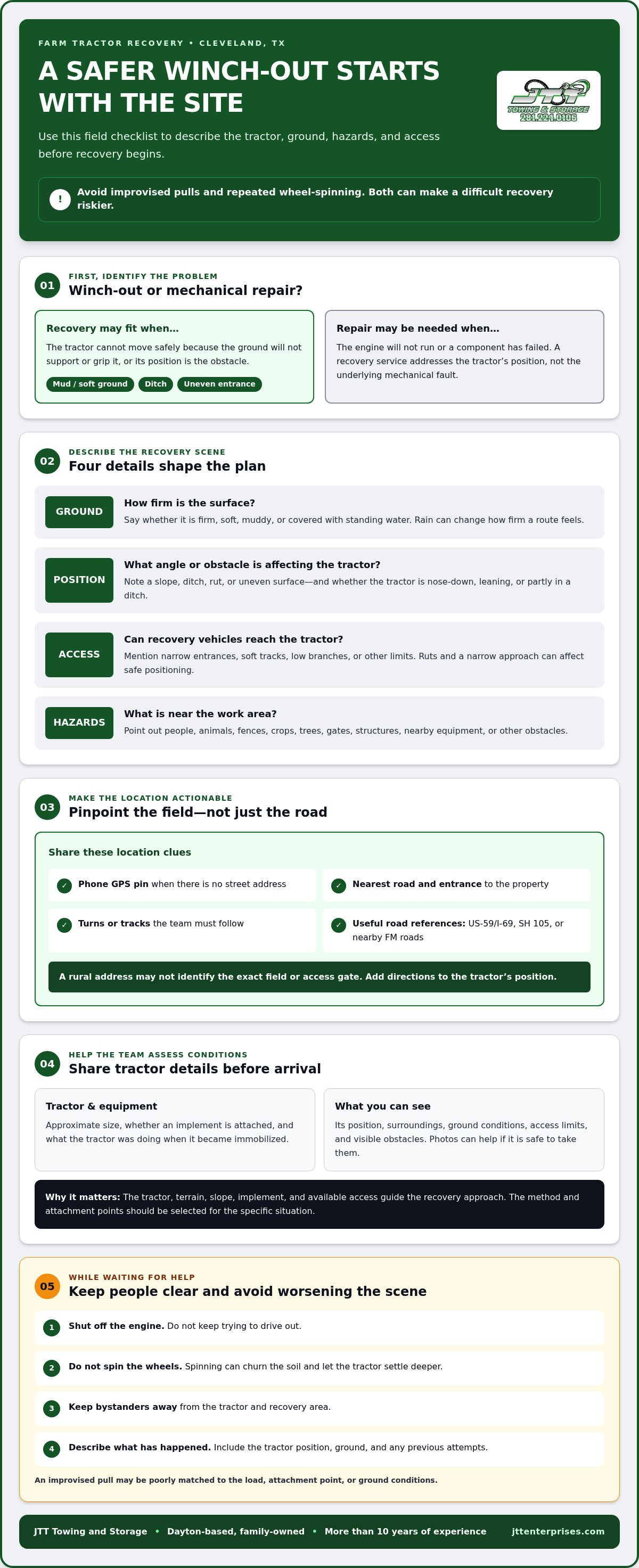
Location details help distinguish a roadside call from a recovery deeper on a property. US-59/I-69, SH 105, and nearby FM roads can serve as useful reference points when describing the route, but a rural address may not identify the exact field or access gate. Note the nearest road, entrance, and any turn or track the recovery team must follow.
Repeatedly spinning the wheels can churn up soil and allow a tractor to settle deeper, making movement more difficult. The same risk applies to improvised pulls: another vehicle may be poorly matched to the load, attachment point, or ground conditions. Stop attempts that are disturbing the ground, keep people clear of the tractor, and describe what has happened before recovery begins.
JTT Towing and Storage provides off-road recovery and heavy-duty towing support in Cleveland and nearby communities. Its experience with off-road recovery relates directly to equipment stuck beyond firm roads or driveways. If the tractor is immobilized rather than mechanically disabled, sharing its position, terrain, implement status, and access conditions helps frame a practical recovery plan.
How a Farm Tractor Winch-Out Is Planned and Carried Out
A tractor recovery is planned around the conditions at the scene, not just the fact that the machine is stuck. Ground firmness, slope, tractor position, attached implements, and the route into and out of the area can all influence the approach. For a farm tractor winch out service Cleveland TX, clear information from the person requesting help gives the recovery team a useful starting point before it reaches a rural field or access road.
Site assessment guides winch-out planning because the tractor, terrain, and available access determine which recovery method is appropriate. Equipment and attachment points should be selected for the specific situation rather than assumed in advance. The SaskPower vehicle recovery safety guidelines also emphasize considering hazards and recovery conditions before work begins.
What information helps plan the recovery?
Describe where the tractor is and how it sits: for example, whether it is nose-down, leaning, or partly in a ditch. Share its approximate size, whether an implement is attached, and what the tractor was doing when it became immobilized. Mention visible obstacles such as fences, trees, gates, or nearby equipment. Photos can help communicate the position and surroundings when it’s safe to take them.
- Ground: Explain whether the area is firm, soft, muddy, or covered with standing water.
- Slope and position: Note a slope, ditch, rut, or uneven surface that affects the tractor’s angle.
- Access: Describe narrow entrances, low branches, soft tracks, or other limits on reaching the tractor.
- Hazards: Point out people, animals, structures, or other obstacles near the work area.
What happens during a controlled recovery?
On arrival, the team assesses the tractor and surrounding ground before choosing a recovery direction. It considers where the tractor can move, how firm the nearby surface is, and whether the approach is clear. The recovery area is then organized so people remain away from the tractor and the working equipment. This step-by-step planning helps avoid treating a complicated scene like a straightforward pull.
- Assessment: Review the tractor’s position, terrain, obstacles, and access.
- Site planning: Identify a suitable approach and recovery direction, accounting for slope and ground conditions.
- Controlled recovery: Select suitable recovery equipment and attachment points for the tractor and situation, then carry out the planned movement while people stay clear.
- Post-recovery movement: Once the tractor is free, consider the ground and route before moving it onward. If it still can’t move under its own power, communicate that before deciding on the next step.
JTT’s off-road recovery and heavy-duty towing experience supports equipment recovery around Cleveland and nearby communities. Sharing the tractor’s approximate size, attached implement, position, terrain, hazards, and access constraints helps set the scene for a practical plan. For recovery support in the area, JTT’s off-road recovery service is a relevant place to start.
What to Consider Before Requesting Tractor Recovery in Cleveland
A clear recovery request does more than identify a stuck tractor. It gives the team a picture of the site, the approach, and the conditions that may affect planning. A paved roadside with firm ground presents different access considerations from a muddy field entrance, even if the tractor is in a similar position. Share what you can observe rather than guessing how the recovery should be done.
How terrain and tractor position affect the plan
Firm, level access may allow a straightforward approach. Mud, soft shoulders, or uneven ground can change where recovery vehicles can travel and position. Describe whether the tractor is level, tilted, nose-down, or resting at an angle, and mention nearby fences, trees, ditches, or structures. A field entrance may have limited turning room or a soft approach, unlike a paved roadside with open space.
Use this comparison to identify details worth sharing. It helps organize the request, but it doesn’t predict the recovery method or guarantee an outcome.
| Site condition | Details to share |
|---|---|
| Firm access | Route width, entrance location, and room around the tractor |
| Soft ground or mud | Where the ground is soft, whether there’s standing water, and how recent weather changed the site |
| Slope or uneven terrain | The tractor’s angle, nearby dips or ruts, and which direction the ground slopes |
| Restricted approach | Narrow gates, low branches, fences, parked equipment, or other obstacles along the route |
What details should you share when requesting service?
On rural properties, a road name alone may not lead to the tractor. Give the nearest road or landmark, the correct gate or entrance, and clear directions from that point. If the property has multiple driveways or field entrances, identify the one to use. A phone GPS pin can help pinpoint a location when there’s no clear street address.
For a farm tractor winch out service Cleveland TX request, include a concise description of the tractor and conditions:
- Approximate tractor size and its current position
- Whether it’s carrying or connected to an implement or other equipment
- Ground firmness, mud, standing water, slope, and changes after rain
- Access limits, visible hazards, and nearby landmarks
These specifics help JTT Towing and Storage plan off-road recovery support for a Cleveland-area property. The off-road heavy recovery guide offers additional context on how terrain and access factor into recovery planning. Clear directions and an honest description of the scene help the team understand what it may encounter before reaching the tractor.
What to Do While Waiting for a Farm Tractor Winch-Out
A stuck tractor can make a busy worksite feel urgent, but avoid taking steps that put people closer to the hazard. Until a farm tractor winch out service Cleveland TX arrives, focus on creating space, preventing further ground disturbance, and sharing any new information that could change the recovery plan.
Keep people and equipment clear
Move yourself and others to a safe place outside the tractor’s likely movement path and the recovery work area. Keep children, bystanders, and uninvolved equipment well away. Never approach, touch, or step over recovery lines, attachment points, or equipment under tension. If the area becomes unsafe, move farther away and communicate the concern rather than trying to intervene.
Don’t attempt an improvised pull with a pickup, another tractor, or other vehicle. A pull can place unexpected force on equipment or attachments, and people nearby may be exposed to serious danger. Avoid repeated acceleration or spinning the tractor’s wheels, too. Wheel spin can churn the soil, deepen ruts, and leave the tractor in a more difficult position. If the tractor is still running, follow safe operating judgment and avoid actions that increase risk.
- Keep clear: Stay outside the recovery path and away from any line or connection that may become tensioned.
- Keep others back: Ask bystanders to remain outside the work area, especially children and anyone not involved in the recovery.
- Don’t pull or rev: Leave recovery attempts to the recovery team rather than using another vehicle or repeated acceleration.
Prepare the access route and useful details
From a safe location, identify the route from the nearest road or property entrance to the tractor. Share which gate to use, where the access track turns, and whether branches, parked equipment, or soft spots could restrict entry. Keep the route clear only if you can do so without entering the hazard area or disturbing unstable ground.
Conditions can change while you wait. Rain may soften a track, water may collect, or a route that seemed firm may become difficult to use. Pass along changes to the ground, access, tractor position, or nearby hazards so the recovery plan can account for current conditions. Don’t walk across soft ground or around the tractor to inspect it if doing so could put you at risk.
JTT’s off-road recovery and heavy-duty towing experience supports recovery work involving equipment and challenging access. For related context on heavy recovery, see the heavy-duty towing guide for Dayton. If your tractor is stuck near Cleveland, request off-road recovery support and share the tractor’s location, access route, and any changed site conditions.
Request Farm Tractor Winch-Out Service Near Cleveland, TX
A useful recovery request gives the team a clear picture of both the tractor and the site. JTT Towing and Storage is based in Dayton and serves Cleveland and nearby communities. Its off-road recovery and heavy-duty towing experience is relevant when farm equipment is immobilized in soft ground or difficult-to-reach areas. Recovery focuses on moving equipment from its stuck position; it isn’t tractor repair or agricultural equipment sales.
How JTT supports recovery requests around Cleveland
Properties near Cleveland can have long driveways, field entrances, and access routes that differ from paved roads. Describing the route as well as the tractor’s location helps JTT understand the setting before planning the recovery. A clear request also helps distinguish an off-road recovery situation from a mechanical problem that prevents the tractor from operating.
Make your recovery request clear and useful
Be specific and factual. If you don’t know an exact measurement, an approximate description is still useful. Include the nearest road or landmark, the gate or entrance to use, and directions from there to the tractor. A GPS pin can help identify a location on a rural property without a clear street address.
Share the tractor’s position and the conditions around it. Mention if it’s leaning, nose-down, or partly in a ditch; whether an implement is attached; and what the ground is like. Include access restrictions and visible hazards, such as a narrow gate, low branches, fencing, standing water, or nearby equipment. If rain or other changes have affected the ground or route since you first assessed the site, describe those updates too.
- Location: Nearest road or landmark, property entrance, gate, and directions to the tractor.
- Tractor: Approximate size, position, and whether an implement or other equipment is attached.
- Site: Ground firmness, slope, mud or water, access limits, and nearby hazards.
- Changes: Any new conditions affecting the tractor or approach route.
This information helps JTT understand the recovery request and plan around the situation, without assuming a particular method or outcome. For a stuck tractor in Cleveland or a nearby community, request recovery assistance from JTT and share the location, tractor, terrain, and access details.
Take the Next Step Toward a Planned Recovery
A stuck tractor can disrupt work, but the next move doesn’t have to be another attempt in the mud. Choosing a farm tractor winch out service Cleveland TX gives you a way to put the situation in experienced hands and start with a clear account of what’s happening. Share where the tractor is, what it’s connected to, and any conditions that could affect access. That simple preparation helps turn a stressful moment into a focused recovery request.
JTT Towing and Storage is a family-owned and operated business established over 10 years ago, serving Cleveland from its Dayton, Texas base. Its off-road recovery and heavy-duty towing services support recovery needs involving equipment. If the tractor has a mechanical problem after it’s free, arrange the appropriate repair separately.
Request farm tractor recovery assistance from JTT and take the next step with a calm, clear plan. Help is within reach.
Frequently Asked Questions
Can a tractor be winched out of deep mud?
Yes, a tractor may be recoverable from deep mud, but the appropriate approach depends on its position and the conditions around it. A tractor that has settled unevenly or is close to a ditch needs a different assessment from one sitting level in a muddy field. Share how deeply the wheels are bogged down, whether the tractor has shifted or tilted, and what ground lies beyond it. No recovery outcome can be guaranteed in advance.
What information should I provide when requesting a farm tractor winch-out?
Provide the exact location, a GPS pin if available, and directions from the nearest road or property entrance. Identify the tractor by approximate size or model, and explain what it was doing when it stopped moving. Mention whether it’s carrying an implement, and describe anything unusual, such as a wheel trapped against a field edge. For a farm tractor winch out service Cleveland TX, a photo taken from a safe distance may also help communicate the scene.
Is it safe to pull a stuck tractor with a pickup truck?
No, an improvised pickup-truck pull can create serious hazards and may damage equipment. The truck, connection point, and tractor may not be suited to the forces involved, and a line or attachment can fail under tension. Don’t try to free the tractor by accelerating the pickup or attaching a strap to an uncertain point. Keep people away and arrange professional off-road recovery instead.
How do ground conditions affect a tractor winch-out?
Ground conditions affect where recovery vehicles can approach and position, as well as the direction that may be practical to move the tractor. For example, firm ground near a muddy patch may offer a different access route than a soft shoulder or a waterlogged field. Recent rain can also change conditions after the initial call. Tell the recovery team which areas feel firm, where water is collecting, and whether the route has changed.
Can a tractor with an implement attached be recovered?
It may be possible, but the attached implement changes the overall shape and position of the equipment and can limit room to maneuver. A trailing implement may also be on softer ground or caught on an obstacle. Describe what’s connected, where it sits relative to the tractor, and whether it can move freely. Don’t detach equipment or try to reposition it before recovery unless doing so is safe and appropriate.
Does JTT provide off-road recovery near Cleveland, Texas?
Yes. JTT Towing and Storage provides off-road recovery and heavy-duty towing, serving Cleveland from its Dayton, Texas base. Its local service area includes communities in ZIP codes 77535, 77336, 77327, 77561, 77357, 77532, and 77575. Share the property location and access details when requesting assistance so the team can understand where the tractor is and what conditions are present.
What should I do while waiting for tractor recovery?
Keep people and unrelated equipment away from the tractor and the recovery area. Don’t spin the wheels, attempt a pull with another vehicle, or touch lines and connections under tension. If conditions change, such as rain making the entrance softer or a route becoming blocked, pass that update along. Avoid walking over unstable ground to inspect the tractor; report what you can see from a safe position.


