

A semi-truck crash’s total economic cost and its cleanup bill are different figures. The average cost of semi truck accident cleanup depends on the work required, including the size of the crash, traffic delays, hazardous cargo, and specialized recovery needs.
It’s understandable to want one number to estimate the impact of a serious collision. But cleanup can involve more than debris removal: damaged equipment, shifted cargo, and spill-related hazards all affect the response. Extended road closures add wider costs by disrupting traffic and business.
This article explains what drives cleanup costs, how delays and specialized needs affect the work, and how cleanup expenses differ from the broader cost of a truck crash. Understanding the difference helps you assess the likely work without mistaking an overall crash-cost estimate for a specific cleanup bill.
Key Takeaways
- Crash size, traffic disruption, cargo condition, and specialized recovery work all affect the cleanup involved.
- Hazardous-material spills can require extensive remediation, with costs that may extend beyond the initial response.
- Insurance coverage may apply to towing, cleanup, cargo off-loading, and storage, but the policy type and limits matter.
- Understanding what the cleanup requires can help clarify which costs relate to recovery and which stem from the wider crash.
Accident cleanup and traffic delays
A truck crash can disrupt more than the vehicles involved. A blocked highway delays traffic and cleanup, and major pileups can cause closures that cost thousands of dollars per hour in lost productivity.
Traffic Disruption and Cleanup Costs
Cleanup and traffic control often happen at the same time, but they affect costs differently. A single truck crash can trigger a pileup involving dozens of vehicles, increasing the number of damaged vehicles and the debris crews must address. Truck-crash-related delays cost the economy millions of dollars in lost productivity each day. That is the broader impact on road users and businesses, not the cleanup bill.
Cleanup Payment Responsibility
Payment responsibility depends on the applicable insurance coverage and the work involved. Towing and cleanup coverage can pay for removing debris from truck equipment and cargo, towing equipment, off-loading cargo, and storage after a crash. A cleanup expense may therefore involve several distinct services, not just debris removal. For the truck owner, the policy’s scope helps determine which expenses may be covered.
Regulatory Effects on Cleanup Costs
State and local requirements can shape how crews control and clear a crash scene, affecting what must happen before traffic resumes. Requirements may vary by location and by the materials involved, so the work can differ between a roadway debris scene and a spill. Cleanup costs partly depend on the required handling and disposal process, and local requirements can also affect how long lanes remain blocked.
Cleanup Steps and Duration
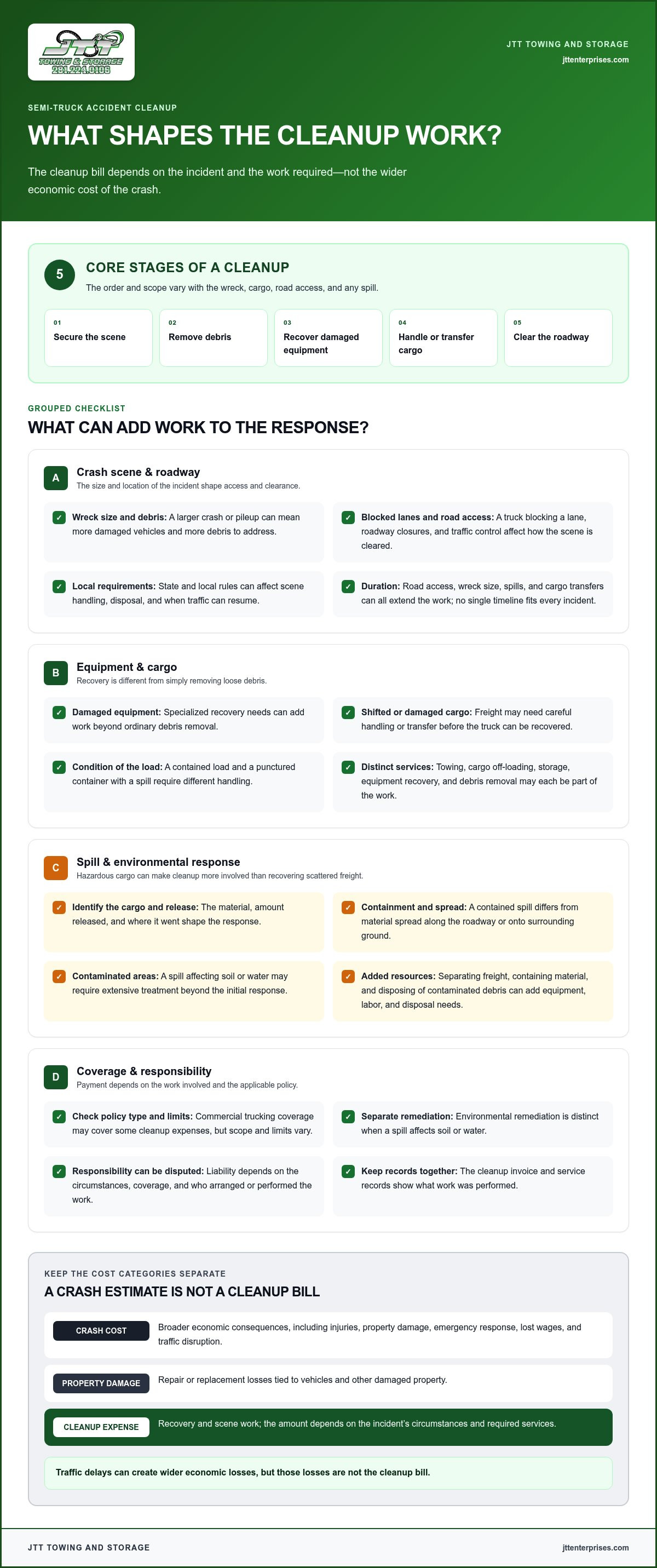
Cleanup generally involves securing the scene, removing debris, recovering damaged equipment, handling cargo, and clearing the roadway. The order and scope depend on the crash: scattered cargo requires different work from equipment blocking a lane. No single timeline fits every incident. Road access, wreck size, spills, and cargo transfers can all extend the work.
Insurance for Cleanup and Environmental Remediation
Commercial trucking policies may cover some cleanup expenses, depending on the policy type and its limits. Coverage for towing, cleanup, and storage can vary by policy and may be limited. Towing and cleanup coverage can address debris removal and cargo off-loading. Environmental remediation is separate when a spill affects soil or water, and hazardous-material spills can require extensive treatment.
Liability Risks When Cleanup Goes Unpaid
If a trucking company does not pay a cleanup bill, responsibility may remain disputed between the parties involved and their insurers. Liability depends on the circumstances, applicable coverage, and who arranged or performed the work. A company may face claims for unpaid cleanup expenses, while an insurer may review whether the policy covers them. Keep the cleanup invoice and service records together to show what work was performed.
Average cost of a large truck crash
That estimate describes crash costs broadly, not a specific cleanup bill. The distinction matters because a collision can involve property damage, injuries, emergency response, lost wages, and traffic disruption.
Fatal crashes carry a much larger economic impact. Those national totals describe the wider effects of crashes, not the amount any one truck owner must pay.
Injury and property-damage-only crashes also contribute substantial costs. These categories explain why an overall average cannot predict the financial effect of a particular collision. A crash involving injuries may bring medical and wage-related losses; a property-only collision centers more on damage to vehicles and other property.
Historical estimates show how truck configuration can affect property damage.
Those figures are historical estimates, not current cleanup prices. They also distinguish property damage from total crash costs. Differences reflect crash type and the cost categories included, not a universal bill.
A useful comparison keeps three categories separate:
- Crash cost: The broader economic consequences, including injuries and property damage.
- Property damage: Repair or replacement losses tied to vehicles and other damaged property.
- Cleanup expense: Recovery and scene work, which depends on the incident’s circumstances.
Keeping these categories distinct makes estimates easier to interpret and prevents a national crash average from being mistaken for a specific cleanup charge.
Cargo hazards and specialized cleanup
A damaged trailer carrying hazardous material changes the cleanup task. Crews must account for the cargo as well as the truck, roadway, and debris. A spill can spread beyond the pavement and affect nearby soil or water, making the work more involved than recovering scattered freight. The material, amount released, and area affected all shape the response.
How Cargo Hazards Change the Work
The first step is to identify the cargo and where it went. For example, a damaged container may still hold its contents, while a punctured one may spill material along the roadway. Those scenes require different handling. The location and extent of the release matter too: a contained spill differs from material that has spread onto surrounding ground.
Specialized cleanup may involve separating damaged freight from recoverable cargo, containing spilled material, and removing contaminated debris. Each task can add equipment, labor, and disposal needs. Even a load shift without a spill requires careful handling, since cargo may need to be transferred before the truck can be recovered. The cleanup scope depends on both the cargo’s condition and the trailer’s damage.
When comparing estimates, separate ordinary recovery work from spill-related work. An invoice may list equipment recovery, cargo handling, debris removal, and environmental response as distinct tasks. Check what each line covers to see whether the estimate addresses only the truck and roadway or also affected soil and water. “Cleanup” alone can refer to several different operations.
Environmental Remediation and Long-Term Effects
Environmental remediation after hazardous-material truck spills can cost millions of dollars. That figure reflects the potential scale of environmental work, not a standard charge for every crash. Cleanup may extend beyond visible roadway material if a release affects soil or water. Removing spilled cargo from the pavement, for example, does not necessarily address contamination in the surrounding ground.
Some hazardous-material spills may require decades of monitoring and treatment for soil and water contamination. This shows why the initial scene response and environmental remediation should be understood as separate stages. Immediate work addresses the crash site; later monitoring tracks whether affected areas need continued treatment. The type of material and extent of contamination influence what follows.
When assessing a crash involving cargo hazards, identify the work categories before comparing totals. Note whether there was a spill, cargo transfer, contaminated debris, or soil and water remediation. These details explain why two crashes with similar truck damage can require very different cleanup efforts. They also distinguish roadway clearance from a longer environmental response.
What is the average cost to clean up a semi-truck accident in the United States?
The cleanup total reflects the work required at that crash scene. It can include truck recovery, cargo handling, debris removal, and storage. Environmental remediation is a separate category when a spill affects soil or water. The average cost of semi truck accident cleanup therefore depends on the tasks the incident requires, not simply the damage visible in a photograph.
Keep the cleanup bill separate from the broader economic cost of a truck crash. A crash estimate can include medical care, lost wages, property damage, and emergency response. Those categories describe the incident’s wider impact, not necessarily the services needed to clear the scene. A collision with damaged equipment but no scattered cargo, for example, creates different cleanup work from a trailer carrying spilled material.
To understand an estimate, review the work items instead of treating “cleanup” as one task. A bill may distinguish truck recovery from load handling. Scattered freight may need to be separated and transferred before equipment can be moved. A contained spill involves different work from contamination affecting surrounding ground. Each additional task changes the cleanup scope.
- Equipment recovery: Identify the work needed to move the damaged truck from its position.
- Cargo handling: Separate recoverable freight from damaged or spilled material.
- Debris removal: Account for material scattered across the roadway or crash area.
- Storage: Include storage when recovered equipment or cargo cannot leave immediately.
- Environmental work: Distinguish spill response from follow-up soil or water treatment.
Consider two examples. In one, a truck blocks a lane but its cargo remains contained. The main tasks are recovering the equipment and clearing the roadway. In another, a damaged trailer spills its load onto nearby ground. That scene adds cargo handling and may require environmental remediation. Similar vehicle damage can therefore lead to different cleanup scopes.
When reviewing a cleanup estimate, match every charge to a described task. Separate recovery, cargo transfer, storage, debris removal, and remediation rather than comparing only the total. If a line combines activities, its description should clarify the work. This breakdown shows what the cleanup covers and which incident details drive the expense.
Who pays for semi-truck accident cleanup: the truck owner, insurer, or government?
Payment depends on the coverage involved, the cleanup tasks, and the policy’s limits. The truck owner, an insurer, or another responsible party may bear expenses under the applicable arrangement. Government agencies may manage roadway response, but that role alone does not establish who pays the cleanup bill. Keep responsibility for the scene separate from responsibility for its costs.
Several types of trucking coverage can apply to post-crash expenses. Towing and cleanup coverage can pay for removing debris from truck equipment and cargo, towing equipment, off-loading cargo, and storage. Physical damage policies generally include some coverage for towing, cleanup, and storage, though it may be insufficient. Cargo policies also include some coverage for those expenses. Each policy addresses different property or services.
That distinction matters when one incident produces several charges. Moving a damaged truck and transferring its load, for example, are separate tasks. Equipment coverage and cargo coverage may apply to different parts of the work. A policy’s terms and limits determine whether those expenses are covered, so having insurance does not mean every cleanup item is automatically paid.
Most trucking companies are required by the Federal Motor Carrier Safety Administration to carry coverage from $750,000 to $5 million, depending on cargo type. That liability coverage range does not itself establish that a specific cleanup expense is covered. Liability coverage and physical damage coverage serve different purposes. The relevant policy category, the type of loss, and the applicable limits all matter when determining payment.
Truck owners without physical damage coverage have no cleanup, towing, or storage coverage under that policy. They may face expenses that the policy would otherwise address. Cargo insurance can cover some towing, cleanup, and storage, but it does not make every charge payable. Consider the owner’s coverage and the cargo policy separately.
To understand responsibility, group the bill by service, then match each item to the relevant coverage:
- Truck equipment: Review which policy applies to recovery, towing, and storage.
- Cargo: Identify whether the charge concerns load removal, off-loading, or cargo debris.
- Uncovered items: Determine which expenses exceed limits or fall outside applicable coverage.
For example, a crash may require equipment towing, cargo off-loading, and storage. Those tasks may involve separate coverage provisions, even when one incident caused them. Keep the descriptions and charges distinct to give the owner and insurer a clearer basis for assessing responsibility. A government agency’s involvement at the scene does not prove that public funds will pay every cleanup expense.
JTT Towing and Storage: Accident Recovery
JTT Towing and Storage provides Accident Recovery for truck crashes requiring vehicle recovery and towing. For incidents in the local areas associated with ZIP codes 77535, 77336, 77327, 77561, 77357, 77532, and 77575, Heavy-Duty Towing can address a damaged truck that needs recovery. Off-Road Recovery applies when a vehicle leaves the roadway, while Vehicle Storage can hold recovered equipment.
These services address vehicle recovery and storage, not hazardous-material remediation or environmental treatment. Spill response and environmental work are separate from towing and recovery, so identify the specific assistance needed after a crash.
For accident recovery or heavy-duty towing, contact JTT Towing and Storage to discuss the situation.
Turn the Cleanup Scope Into a Clear Next Step
A useful estimate of the average cost of semi truck accident cleanup starts with a clear record of the work required at the scene. Keep recovery, cargo handling, storage, and environmental work distinct in your notes. This helps clarify which tasks need attention and makes it easier to discuss the cleanup scope with the parties handling payment.
For truck recovery after a collision, JTT Towing and Storage provides Accident Recovery, Heavy-Duty Towing, and Off-Road Recovery. These services help recover or tow damaged trucks, including vehicles that have left the roadway. They are separate from hazardous-material cleanup and environmental remediation, which involve different work.
Choose the next step based on the immediate need at the scene. If a truck requires recovery or towing, contact JTT Towing and Storage to discuss the situation. A clear description of the vehicle’s position and recovery needs can help start that conversation. With the right information in hand, you can move forward with greater clarity.
Frequently Asked Questions
What Drives Truck Accident Costs Higher?
Injuries, extensive vehicle damage, multiple vehicles, and prolonged disruption can raise total crash costs. A collision involving several vehicles, for example, can create separate damage claims and require more scene coordination than a single-truck incident. Costs can also rise when damaged equipment cannot return to work promptly. Keep crash-related losses separate from cleanup charges: repairs, medical expenses, and recovery work describe different parts of the overall impact.
What factors affect semi-truck accident cleanup costs?
The cleanup scope depends on the truck’s position and damage, the cargo’s condition, and what reached the roadway. An upright trailer with contained freight requires different work from one blocking access with cargo scattered nearby. The estimate also depends on the tasks required and how they are documented. Compare descriptions of the work performed, not just totals, to distinguish recovery from cargo handling.
What are typical costs for fuel, oil, and chemical spill cleanup after a semi-truck accident?
Fuel, oil, and chemical spill cleanup costs depend on the material, affected area, and remediation required. A small roadway spill and a release that reaches surrounding soil involve different scopes of work. Hazardous-material spills can require environmental remediation, including treatment or monitoring for soil and water impacts. Separate immediate spill response from follow-up environmental work in the incident records, since these tasks address different stages of cleanup.
How much do towing, recovery, and heavy-duty vehicle removal add to cleanup costs?
Towing and recovery charges depend on the truck’s condition and position, and the work needed to move it safely. A disabled tractor on accessible pavement presents a different recovery situation from a damaged truck off the roadway. Cargo that must be shifted before removal adds another task. Review the service description to understand the recovery work performed, and distinguish vehicle removal from separate cargo handling or storage.
What cleanup costs can arise from cargo spills, and how do they vary by cargo type?
Cargo-spill cleanup can involve removing freight, handling damaged containers, clearing debris, and addressing contamination. Scattered packaged goods, for example, require different handling from leaking liquid cargo. Hazardous materials may also require environmental remediation if a spill affects soil or water. The cargo, its condition, and where it spread determine the work involved. Record those details to understand why cargo-related tasks differ.


