
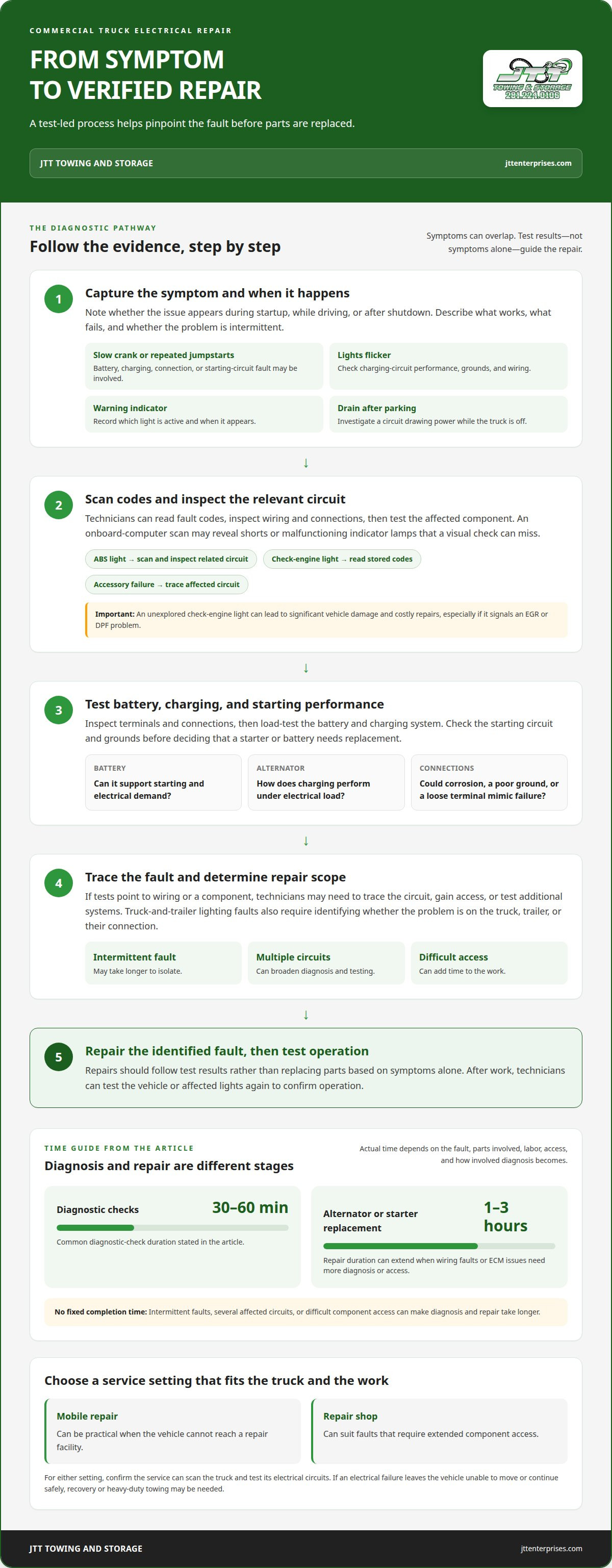
Electrical problems can sideline a commercial truck, but diagnosis is often quicker than the repair itself. For commercial truck electrical repair, diagnostic checks commonly take 30-60 minutes, while alternator or starter replacement often takes 1-3 hours. Wiring faults and ECM problems can take longer when diagnosis or access is more involved.
Dim or flickering lights, slow starts, malfunctioning gauges, and dashboard warning lights are signs to take seriously. Commercial truck electrical repair depends on the fault, the parts involved, and the labor required, so the specific diagnosis determines the work and quote.
This guide explains what can affect repair time and cost, which warning signs to watch for, and what diagnostics, ECM work, and alternator repairs may involve. You’ll also learn when to arrange repair support or, if the truck cannot continue safely, Heavy-Duty Towing.
Key Takeaways
- Learn how ABS, warning-light, and check-engine symptoms can guide the diagnostic process.
- See why battery and starting-circuit testing can help identify the source of starting trouble.
- Understand how wiring harness faults and ECM issues can affect repair scope and service time.
- Find out which factors shape an electrical repair quote, from the fault’s location to parts and labor.
- Know when a truck that cannot continue safely may need recovery or heavy-duty towing.
How long does truck electrical repair take?
Truck electrical repair time depends on whether the fault is easy to isolate or hidden in wiring. Most diagnostic checks take 30-60 minutes, while repairs can take longer when technicians need to trace a circuit, access a component, or test the vehicle again. A flickering lamp may point to a charging-circuit issue, while a warning light can require a broader scan.
Diesel truck electrical diagnostics can include reading fault codes, load-testing the battery and charging system, inspecting wiring, and testing suspected components. An onboard-computer scan can reveal wiring shorts or malfunctioning indicator lamps that a visual check may miss, according to the U.S. Environmental Protection Agency. Repairs should follow test results, rather than replacing a part based on symptoms alone.
ABS, warning-light, and check-engine troubleshooting starts by noting which indicator is active and when it appears. Technicians can scan for fault codes, inspect relevant wiring and connections, then test the affected component. A check-engine light left unexplored can lead to significant vehicle damage and costly repairs, especially if it signals an EGR or DPF problem.
- ABS light: Record whether it stays on or appears intermittently, then scan and inspect the related circuit.
- Check-engine light: Read stored codes and connect them to the engine symptoms before selecting repairs.
- Flickering lights: Test charging-circuit performance and inspect grounds and wiring for faults.
- Accessory failure: Identify whether one device or several systems have stopped working, then trace the affected circuit.
Interior lighting faults can involve cab lamps, switches, or damaged connections; exterior faults may affect headlights, marker lamps, or signals. Truck and trailer lighting repairs also require identifying whether the problem is on the truck, trailer, or their connection. Technicians can inspect the affected lights and wiring, then test operation after repairs. Lighting upgrades add work if installation requires new wiring or circuit changes.
Choose a dealership, independent shop, or mobile repair service based on the truck’s condition and the diagnostic work needed. A mobile service can be practical when the vehicle cannot reach a repair facility; a shop setting can suit faults requiring extended component access. In either case, confirm the service can scan the truck and test its electrical circuits.
Repair time can increase when a fault is intermittent, several circuits are affected, or access is difficult. A clear symptom description, such as “the trailer marker lights fail only when connected,” gives technicians a useful starting point and can focus diagnosis. This helps limit avoidable downtime without promising a fixed completion time.
What Are Common Signs Of Electrical Problems?
Battery, alternator, starter, wiring, and module faults can all disrupt a truck’s electrical system. Common repair work includes battery and charging diagnostics, circuit testing, and component replacement.
A diesel truck that cranks slowly, needs repeated jumpstarts, or loses power to accessories may have a battery or charging fault. The timing matters: a problem after parking differs from one that appears while the engine is running.
Battery Drain and Intermittent Problems
A battery that goes flat after parking can point to a circuit drawing power while the truck is off. Intermittent faults may show up as gauges or accessories that work, fail, then return. Technicians can record when the issue occurs, inspect connections, and trace circuits to distinguish a drain from a loose terminal or failing component.
For more useful diagnostics, note whether the drain follows a particular event, such as using a cab accessory or connecting a trailer. This detail helps narrow the inspection without assuming the battery itself is the cause.
Battery Testing and Replacement
Battery testing evaluates whether the battery can support starting and electrical demand. Technicians inspect terminals and connections, then test battery performance before recommending replacement. Corrosion or a poor connection can imitate battery failure, so replacing the battery without checking the circuit may leave the original symptom unresolved.
If testing identifies a failed battery, replacement addresses that component. Technicians should also consider whether charging performance contributed to the failure. A new battery alone won’t correct an alternator or wiring problem that continues to affect the system.
Battery and Alternator Load Testing
Load testing assesses battery and alternator performance under electrical demand. Rather than judging only by how the engine starts, technicians check how each component performs while the system is working. Results help distinguish a weak battery from a charging fault and reduce the risk of replacing a working part.
Testing the complete starting circuit matters, too. A suspected starter problem can stem from a corroded ground or battery connection, so technicians inspect those connections before recommending starter replacement.
Symptoms often overlap. A weak battery, charging fault, poor ground, or damaged wire can each cause slow starts or unreliable accessories. A useful diagnostic sequence is to inspect the battery and connections, test battery and alternator performance under load, then examine the starting circuit and related wiring. This ties replacement decisions to test results.
Track whether the truck’s issue happens during startup, while driving, or after shutdown. For example, a battery that drains only after parking calls for a different circuit investigation than accessories that fail while the engine runs. Include any recent battery replacement or accessory installation in the symptom history.
If an electrical failure leaves the vehicle unable to move, light-duty towing can help transport it from the breakdown location.
Can You Repair Faulty ECM Systems?
An ECM-related fault can be repaired once diagnostics identify whether the problem lies in the module, wiring, or another component. Common causes of truck electrical failures include damaged wiring, loose connections, failed fuses, poor grounds, and malfunctioning components.
On a diesel truck, the ECM works with connected circuits and sensors, so a warning or fault code needs context. Technicians can inspect the circuit and harness before deciding whether repair or replacement addresses the cause.
Wiring Harness Repairs and Replacements
A wiring harness groups conductors that connect vehicle systems and components. Repairs can address a damaged section or faulty connection; replacement may suit wiring too extensively damaged for practical repair. Technicians trace the affected circuit, inspect its routing and connectors, then test operation after the work.
For example, an engine symptom paired with an intermittent electrical fault can lead technicians to inspect the engine harness and its connections. The symptom points toward a system, while circuit testing helps locate the underlying failure.
Wiring, Connectors, Fuses, and Grounds
A careful inspection checks visible wiring, connections, terminals, fuses, and switches for condition and security, according to the U.S. Army Air Forces. Technicians can look for loose connectors, damaged insulation, a failed fuse, or a poor ground interrupting power or signals. Each finding helps narrow down the circuit that needs repair.
Replacing a fuse without finding why it failed may leave the underlying problem in place. A technician can trace the affected circuit, inspect its connected component, and test the repair instead of treating the fuse as the only fault.
Wiring and Circuit Failures
A circuit failure can affect one component or several functions connected through the same wiring path. Intermittent faults may appear only when a harness moves or a connection loses contact. Technicians troubleshoot by matching the reported symptom to the affected circuit, inspecting wiring, and testing connections along the path.
For a fleet operating in 77535, noting which systems fail together can help focus inspection. If a gauge and another component stop working at once, technicians can investigate shared wiring or grounds rather than assume both components failed independently.
Custom fleet wiring requires a clear understanding of how each added component connects to the vehicle’s existing circuits. Technicians can identify the intended power source, inspect connections, and test the installed circuit so the added component works without masking an existing fault.
ECM troubleshooting should distinguish a module fault from a wiring or connection problem. Technicians can read fault codes, inspect the related harness, and test the circuit before recommending ECM replacement. This helps identify when a damaged wire, loose connector, fuse, or ground explains the same symptom.
After wiring repairs or harness replacement, technicians can retest affected functions and check whether the original symptom remains. For a diesel truck with recurring faults, recording codes, symptoms, and previous wiring work gives the next diagnostic step a more precise starting point.
Alternator repair and replacement
An alternator problem can affect battery charging and electrical performance while the engine is running. A mechanic’s inspection and test results help determine whether repair or replacement best addresses the fault.
Alternator Repairs
Alternator repair starts by testing charging performance and inspecting the component’s wiring and connections. Dim lights, a charging warning indicator, or repeated battery trouble can help technicians identify when to examine the alternator. These symptoms alone don’t establish the cause, so inspection should include the charging circuit before work begins.
If testing points to a connection or circuit issue, repairing that fault may address the symptom without replacing the alternator. Technicians can then retest the charging system to see whether the repair restored proper operation.
Battery and alternator performance are connected, but a weak battery doesn’t automatically mean the alternator has failed. A useful diagnostic sequence is to inspect connections, test the battery and charging system under load, then relate the results to symptoms such as lights dimming while the truck is running. This helps distinguish a charging fault from a separate electrical problem.
Alternator Replacement
Replacement becomes the relevant option when testing identifies the alternator itself as the failing component. Most alternator and starter replacements take 1-3 hours. The time can vary with component access and the work required to remove and install the unit.
After installation, technicians can test charging performance and check whether the original symptom remains. For example, if dim lights prompted the repair, they can verify that lighting operates consistently with the engine running. A post-replacement test also helps identify a separate wiring issue that may still affect charging.
Starter and alternator repairs address different parts of the starting and charging systems. A truck that struggles to start may need starting-circuit diagnosis, while charging symptoms call for alternator and battery testing. Because symptoms can overlap, technicians use test results to guide repairs rather than replacing both components based on one complaint.
Share when the problem occurs: during startup, while driving, or after the truck has been parked. A report that lights dim while running gives the mechanic a useful diagnostic clue; a truck that starts poorly after parking points to a different test sequence. Specific symptoms help focus inspections and avoid unnecessary component replacement.
Routine checks of a diesel truck’s battery, alternator, wiring, and starter can help identify developing electrical issues. During an inspection, technicians can look for connection problems and test charging performance, then recommend repairs based on their findings. If the truck cannot continue safely, arrange transport rather than driving with a suspected charging fault.
Commercial truck electrical repair pricing
Repair pricing depends on the fault, diagnostic time, parts, access, and labor involved. The quote depends on the specific case and is provided after a request; an estimate should separate diagnosis, required parts, and repair work.
A loose connection may require different work than a damaged harness or failed alternator. A truck with several electrical issues can also need more diagnostic steps than one with an isolated fault. Trailer repair may involve tracing both the truck-to-trailer connection and the affected trailer circuit.
For a useful estimate, technicians identify the complaint and test the relevant electrical systems. They can explain what the tests found, which component needs attention, and how the proposed work addresses the symptom. A mobile diagnosis may involve different access conditions than repairs performed where the truck is parked.
What should you expect in a repair estimate?
A clear estimate connects each proposed task to a diagnostic finding. It distinguishes testing from parts replacement and explains whether wiring repair, component work, or further troubleshooting is included. If testing reveals another fault, the added work should be explained before the repair scope changes.
Before authorizing work, ask what system failed, what testing supports the diagnosis, and what the estimate covers. Ask whether further diagnosis could change the scope, too. These questions help clarify the work without relying on a generic cost range.
Qualifications, coverage, and safe operation
A qualified commercial truck electrical shop should explain its technicians’ heavy-duty diagnostic experience and how they test circuits and components. Ask how the shop will identify the fault and verify the repair, rather than relying on a credential name alone.
To find a qualified commercial truck electrician near you, look for experience with heavy-duty electrical systems and a clear diagnostic process. If your truck is near 77535, describe its symptoms and whether a trailer is involved so the discussion starts with useful details.
Electrical problems can affect lights, gauges, starting, or vehicle operation. If a fault affects visibility or the truck’s operation, continuing to drive may create a safety concern. Arrange assistance instead of taking an unsafe truck back onto the road.
Warranty and insurance coverage depend on the applicable policy and repair terms. Review the terms for covered parts, labor, exclusions, and claim requirements before assuming a repair qualifies.
Ask which tests support the diagnosis, what the estimate includes, and whether extra work needs approval. If an electrical failure leaves your truck unable to continue, request towing assistance.
JTT Towing and Storage
JTT Towing and Storage can help when an electrical failure leaves a commercial truck unable to continue safely. Heavy-duty towing can move a disabled truck, while accident recovery or off-road recovery may fit situations involving a collision or difficult terrain. Vehicle storage is an option when the truck needs to be held after recovery.
Choose recovery or towing when the vehicle cannot travel safely to its next stop. Share the truck’s location, condition, and whether it is off-road or involved in an accident so the situation is clear.
Contact JTT Towing and Storage to discuss recovery or towing for your truck.
Keep the Next Step Clear
A truck that cannot continue safely needs a recovery plan alongside its repair plan. Before arranging help, note the vehicle’s location, whether it is off-road or accident-damaged, and any access details that may affect recovery. These details help explain the situation clearly and keep the next decision focused on moving the truck safely.
JTT Towing and Storage offers Heavy-Duty Towing, Accident Recovery, and Off-Road Recovery for situations where a commercial vehicle needs assistance getting off the road or out of difficult terrain. If electrical trouble has stopped your truck, contact JTT Towing and Storage today to discuss the appropriate recovery support. A clear plan can help you move forward with the next stage of commercial truck electrical repair.
Take the next step with clear information and practical support. Your truck’s situation deserves a focused response.
Frequently Asked Questions
What’s the most common cause of a semi truck that won’t start?
A weak battery or a fault in the starting circuit is a common place to begin diagnosis, but no-start symptoms can have several causes. A mechanic can test the battery, inspect its terminals and grounds, then check the starter circuit. For example, a corroded ground can mimic a starter failure. Testing connected components helps identify the cause instead of replacing parts based on symptoms alone.
What are typical commercial truck electrical repair costs in the United States?
There isn’t one typical cost that applies to every truck electrical fault. The quote depends on diagnostic time, the component or wiring involved, parts, access, and labor. A connection repair differs from tracing an intermittent circuit or replacing a component. A useful estimate separates diagnostic work from the proposed repair and explains what each item covers. The quote depends on the specific case and is provided after a request.
How much does emergency roadside truck electrical repair cost?
Emergency roadside repair costs depend on the fault, testing needed at the truck’s location, required parts, and work involved. A battery or connection issue may call for different work than a wiring fault that requires more troubleshooting. To understand a quote, look for the diagnostic task, repair scope, parts, and any additional work described separately. The quote depends on the specific case and is provided after a request.
How long do common commercial truck electrical repairs take?
Diagnostic checks commonly take 30-60 minutes, while alternator or starter replacements often take 1-3 hours. Those are useful planning estimates, not a single timeline for every fault. For example, a technician may need more time if an intermittent wiring problem appears only under certain conditions or if component access adds work. The diagnostic result and repair scope determine how much time the truck remains out of service.
What are the safety risks of driving a commercial truck with electrical problems?
Electrical problems can leave a truck unable to move, and ignoring a check-engine light can lead to significant vehicle damage and costly repairs. If the truck cannot continue safely, it may need recovery or Heavy-Duty Towing.


