
After a breakdown or accident, recovery is only part of the plan. You also need to know where the vehicle will go next. For businesses looking for secure vehicle storage Dayton TX, coordinating storage with towing or accident recovery can make the next steps clearer, especially when a commercial vehicle is involved.
Questions often come up about the handoff, what details to prepare, and how to arrange retrieval later. JTT Towing and Storage is a family-owned Dayton business that provides vehicle storage alongside towing and recovery services.
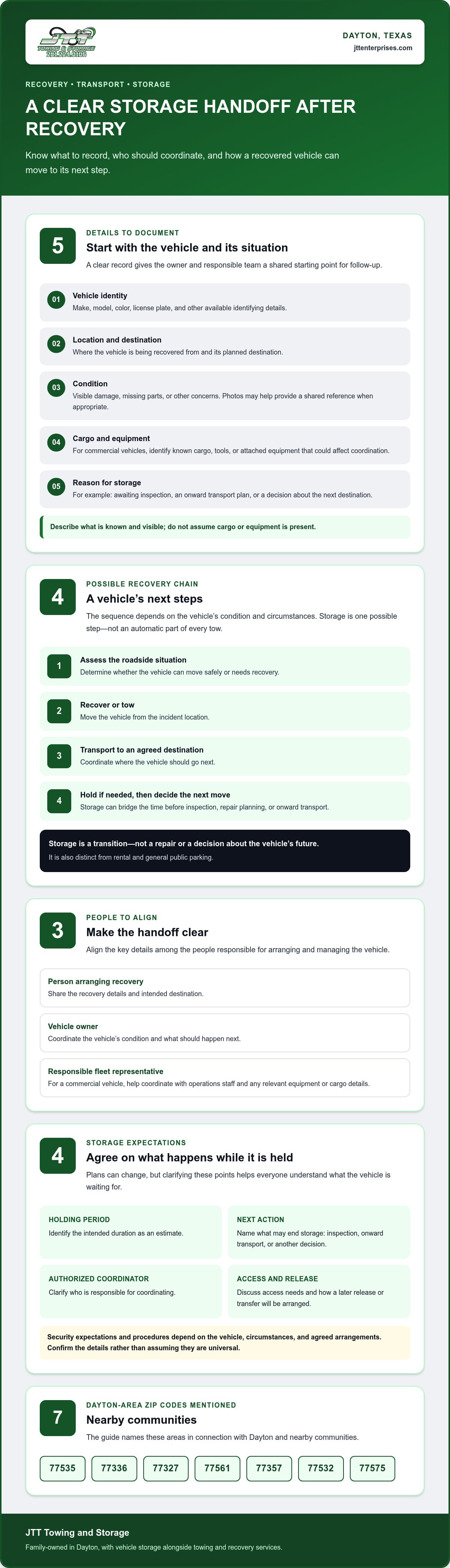
This guide explains how storage fits into recovery and transport, what information helps coordinate the process, and how JTT can assist in Dayton and nearby communities, including areas associated with ZIP codes 77535, 77336, 77327, 77561, 77357, 77532, and 77575. Whether a vehicle needs to be moved after an incident or held while work is interrupted, a clear plan can help you take a practical next step.
Key Takeaways
- Vehicle storage can help keep a recovery plan moving after a collision, breakdown, or interruption to fleet operations.
- Before arranging secure vehicle storage Dayton TX, gather the vehicle’s identifying details, current condition, location, and reason for storage.
- Recovery, transport, and storage serve different roles. Understanding the handoff helps you plan the vehicle’s next step.
- Have the recovery status and responsible contact ready to make storage coordination clearer.
- JTT brings accident recovery, heavy-duty towing, and vehicle storage together as a Dayton-based, family-owned provider.
When Secure Vehicle Storage in Dayton Helps After a Breakdown or Accident
Secure vehicle storage is a holding arrangement for a vehicle after towing or recovery, while its owner or responsible team decides what should happen next. It can bridge the gap between moving a vehicle from the scene and arranging an inspection, repair, or onward transport. Storage is not vehicle repair, rental, or general public parking. The term Vehicle impoundment offers a general overview of vehicles being held after they are towed, though the circumstances and arrangements can vary.
For a business searching for secure vehicle storage Dayton TX, the practical question is whether holding the vehicle helps organize its next step. The need depends on the vehicle and situation, so storage is not necessary after every breakdown or accident.
Why a recovered vehicle may need temporary storage
After a collision, a vehicle may need to leave the scene before its owner has decided on inspection, repair, or another destination. A disabled commercial truck may also need recovery and a place to be held while a fleet team organizes onward transport. Separating recovery from those later decisions gives the responsible people time to coordinate instead of settling every detail at the roadside.
Storage can also help when a vehicle is part of an interrupted fleet operation. A truck or trailer may be out of service while the business assesses its condition, reorganizes equipment, or plans the next move. Holding the vehicle is a transition, not a substitute for mechanical work or a decision about its future.
Which Dayton-area vehicles may need a coordinated storage plan
Commercial trucks, trailers, and other work vehicles can require different recovery and transport plans. A disabled truck may need heavy-duty towing, while a damaged vehicle following a collision may need accident recovery before storage. If a trailer or fleet asset is involved, the responsible contact may also need to coordinate its condition, location, and destination with operations staff.
JTT provides recovery, towing, and vehicle storage in Dayton. For more on planning storage around commercial assets and fleet needs, read the guide to commercial vehicle storage in Dayton.
Think of storage as one link in the recovery chain: the vehicle is recovered, transported, held if needed, and then directed toward its next step. A clear plan helps owners and fleet teams understand what happens after the vehicle leaves the scene.
What Secure Vehicle Storage Should Address Before a Vehicle Is Moved
Before transporting a recovered vehicle to storage, align the key details among the person arranging recovery, the vehicle owner, and any responsible fleet representative. A short, clear record can reduce confusion later, especially when a commercial vehicle, trailer, cargo, or work equipment is involved. Security expectations depend on the vehicle, the circumstances, and the agreed storage arrangements, so clarify the relevant expectations rather than assuming every location has the same features or procedures.
Vehicle details and condition to document
Record details that help identify the vehicle and describe its state at recovery. Note what is visible and relevant, and don’t assume cargo or equipment is present.
- Vehicle identity: Record the make, model, color, license plate, and other identifying details available.
- Location: Note where the vehicle is being recovered from and its planned destination.
- Condition: Describe visible damage, missing parts, or other concerns. Photos may provide a shared reference when appropriate.
- Cargo and equipment: For commercial vehicles, identify any known cargo, tools, or attached equipment that could affect coordination.
- Reason for storage: Record why the vehicle is being held, such as awaiting inspection, a transport plan, or a decision about its next destination.
Clear records give owners and fleet representatives a consistent starting point for follow-up. For a vehicle held after a non-consensual tow, the Texas consumer rights for towed vehicles page explains relevant consumer information. The circumstances of a recovery and the storage arrangement matter, so keep the details specific to the situation.
Storage expectations to establish during coordination
Identify the intended holding period as an estimate, along with the action that may end storage: inspection, onward transport, or another decision by the responsible party. Plans can change, but naming the next step helps everyone understand what the vehicle is waiting for.
Also clarify who is authorized to coordinate, what access is needed, and how a later release or transfer will be arranged. These details depend on the vehicle and agreed arrangements, so don’t assume a universal access policy or release process. JTT provides vehicle storage alongside recovery and towing in Dayton. Learn more about JTT’s towing and vehicle storage.
How Vehicle Storage Connects With Dayton Towing and Accident Recovery
After an incident, a vehicle may move through several distinct steps: roadside assistance, recovery or towing, transport to an agreed destination, and storage if it needs to be held before a decision is made. The sequence depends on the vehicle’s condition and the circumstances. Storage is one possible next step, not an automatic part of every tow.
From roadside incident to a storage decision
At the scene, the priority is addressing the immediate situation and determining whether the vehicle can move safely or needs recovery. Towing or recovery moves the vehicle; it does not determine whether the vehicle should be repaired, inspected, or have cargo handled. After transport, the owner or authorized representative can decide on the next step. For a tractor-trailer collision, tractor-trailer accident recovery in Dayton may be part of the response before storage is considered.
| Stage | Primary role |
|---|---|
| Immediate roadside assistance | Address the vehicle’s immediate roadside situation and determine what help is needed. |
| Recovery and transport | Move a disabled or damaged vehicle from its location to an agreed destination. |
| Storage | Hold the vehicle while the responsible parties organize inspection, onward transport, or another next step. |
These roles connect, but they are not interchangeable. The Texas vehicle towing and storage laws page from the Texas Department of Licensing and Regulation provides information about the state’s towing and vehicle-storage oversight. Which details apply can depend on the circumstances and arrangement.
Commercial vehicle coordination after recovery
For a fleet, one clear point of contact can keep decisions organized. The vehicle owner, fleet manager, dispatcher, and any authorized representative can share the recovery location, vehicle condition, destination, and person responsible for the next decision. This separates the immediate task of moving the vehicle from later decisions about inspection, cargo, or fleet operations.
If a commercial truck needs towing, heavy-duty towing in Dayton can be part of the recovery plan. Once the vehicle reaches its destination, secure vehicle storage Dayton TX may provide a practical holding step while the owner or fleet team coordinates what comes next. Make the handoff clear by identifying the responsible contact and communicating the intended next action.
What to Prepare Before Arranging Vehicle Storage in Dayton
A few key details can connect recovery, transport, and storage without slowing later decisions. Before coordinating secure vehicle storage Dayton TX, gather what you know and identify who can speak for the vehicle. If you’re arranging help from Dayton or a nearby community, be ready to describe the vehicle’s current location clearly.
Information that helps coordinate the vehicle’s movement
Use this sequence to organize the handoff. If a detail is unknown, say so rather than guessing.
- Identify the vehicle. Share its type and make or model if known, and say whether it’s a truck, trailer, or another commercial vehicle. Include size or configuration details that may affect recovery and transport.
- Give the current location. Provide the road, business, or nearby landmark, plus useful directions. Specify whether the vehicle is still at the incident scene or has already been moved.
- Describe its condition. Note visible damage, whether it can move under its own power, and any condition that could affect handling.
- Clarify recovery status. Say whether recovery has started, is underway, or is still needed. This distinguishes the immediate movement request from a later storage arrangement.
- Name the responsible contact. Identify the owner or authorized representative who can coordinate decisions. For a fleet, this may be a fleet manager or dispatcher. Share contact details with the people involved in the handoff.
- Flag cargo or equipment concerns. Mention relevant cargo, tools, or attached equipment if they affect handling or planning. Share only the information needed to coordinate the vehicle, not sensitive business details that are unnecessary.
Planning retrieval or another next step
Before the vehicle is moved, identify what you expect to happen next. It may need inspection, repair, onward transport, or a decision from the owner or fleet team. The plan can change, but naming the likely next action gives everyone a useful reference point and separates vehicle movement from later operational decisions.
Access and release arrangements depend on the specific storage agreement and circumstances. Keep the authorized contact informed and make sure that person understands how the next step will be coordinated. Clear communication can make an interruption easier to manage, particularly when several people handle the vehicle’s movement and follow-up.
Details about coordinating vehicle storage and recovery in Dayton are available from JTT.
JTT Vehicle Storage in Dayton: A Practical Next Step After Recovery
A vehicle incident can leave an owner or fleet team coordinating several decisions at once. JTT Towing and Storage is a family-owned, Dayton-based business. Its services bring accident recovery, heavy-duty towing, and secure vehicle storage together, connecting vehicle movement with a place to hold the vehicle while responsible parties plan what comes next.
How JTT’s recovery and storage services fit together
Recovery or towing moves a vehicle from an incident or disabled location. Storage can follow when the vehicle needs to be held before an owner or authorized representative decides whether to arrange inspection, repair, or onward transport. The right sequence depends on the vehicle and circumstances, but coordinating these needs can clarify the handoff. For fleet-focused considerations, see the guide to commercial vehicle storage in Dayton.
Take the next step with clear information
Gather a few practical details so the situation is easier to explain:
- Vehicle type: Identify whether it’s a commercial truck, trailer, or another vehicle.
- Location: Share where the vehicle is now and whether it has already been recovered.
- Condition: Describe its visible condition and whether it can move under its own power.
- Responsible contact: Name the owner or authorized person who can coordinate decisions.
- Next step: Explain whether the vehicle may need storage while inspection, repair, or transport is arranged.
For businesses considering secure vehicle storage Dayton TX, these details help frame the immediate need without requiring every later decision to be settled at once. JTT’s combination of recovery, towing, and storage gives Dayton-area commercial and industrial customers a practical point of contact as they organize the vehicle’s next step.
Learn about JTT’s vehicle storage and recovery services.
Make the Next Step After Recovery Clear
After a breakdown or accident, recovery may be only the first decision. Storage can provide a practical holding step while an owner or fleet team organizes inspection, repair, or onward transport. Clear details about the vehicle, its condition, location, and responsible contact can help coordinate the handoff.
For businesses considering secure vehicle storage Dayton TX, it helps to think of towing, recovery, and storage as connected needs, while recognizing that the right plan depends on the situation. JTT is a family-owned Dayton business, combining accident recovery, heavy-duty towing, and vehicle storage for commercial and industrial customers.
You don’t need every later decision settled before organizing a practical next step. Start with the information you have and the person authorized to coordinate the vehicle. Contact JTT about vehicle storage and recovery to discuss your situation and plan the next move.
Frequently Asked Questions
What does secure vehicle storage mean after a tow or accident?
It means holding a towed or recovered vehicle while its owner or authorized representative decides on the next step. That may include arranging an inspection, repair, or onward transport. Storage is separate from towing, recovery, and repair, and the specific arrangement depends on the circumstances. For commercial vehicles, it can also help a fleet team coordinate follow-up without making every operational decision at the roadside.
Can I arrange vehicle storage in Dayton after an accident recovery?
Yes. JTT provides accident recovery and vehicle storage in Dayton, so storage can be part of the plan after a vehicle is recovered. The vehicle’s condition, location, and intended next step help shape the coordination. For teams searching “secure vehicle storage Dayton TX,” it helps to have an owner or authorized representative ready to discuss the vehicle and its needs.
What information should I have ready before arranging vehicle storage?
Prepare the vehicle type and identifying details, its current location, visible condition, and whether recovery has started or is complete. Identify the owner or authorized contact who can coordinate decisions, and describe the likely next step, such as inspection or onward transport. If it’s a commercial vehicle, mention relevant cargo or equipment concerns without sharing sensitive business information that isn’t needed for coordination.
How long can a vehicle remain in storage after recovery?
There isn’t one storage duration that applies to every recovered vehicle. The intended period depends on the situation and the specific storage arrangement. Before the vehicle is moved, consider what it may be waiting for, such as an inspection, a transport plan, or a decision from the owner or fleet team. Keep the responsible contact informed if plans change, and coordinate the next step according to the agreed arrangements.
Can JTT store a commercial vehicle after heavy-duty towing?
JTT provides heavy-duty towing and vehicle storage for commercial and industrial customers, so storage can be part of planning for a commercial vehicle after towing. Share the vehicle type, location, condition, and who is authorized to coordinate its next step. JTT is based in Dayton and serves local areas associated with ZIP codes 77535, 77336, 77327, 77561, 77357, 77532, and 77575.
How is vehicle storage different from vehicle repair?
Vehicle storage is a holding arrangement; vehicle repair involves diagnosing or addressing mechanical or physical problems. A vehicle may be stored while its owner arranges an inspection or decides what repair or other action is needed. Storage itself doesn’t establish the vehicle’s condition or return it to operation. Keep the two needs distinct when planning what happens after recovery, especially when coordinating on behalf of a fleet.
What happens if a recovered vehicle contains cargo or equipment?
Tell the recovery and storage contacts about cargo, tools, or attached equipment that could affect handling or the vehicle’s next step. Identify the responsible owner or fleet representative and share only the information needed to coordinate. Don’t assume that cargo handling or removal is included in storage. If a load shift or transfer is part of the situation, describe that need separately so it can be considered alongside the vehicle’s movement.


