
What if the biggest challenge in moving a bulldozer isn’t the machine itself, but finding a route and loading plan that fit its size and weight? Choosing a bulldozer hauling service Texas contractors can rely on starts with confirming those details before setting a move date.
Before arranging a heavy haul, get clear answers about the machine, transport equipment, route access, permits, site preparation, and scheduling. This guide explains what information to gather, what to ask a potential provider, and how to check local coverage so you can assess whether the proposed plan fits your move.
JTT Towing and Storage is a family-owned business based in Dayton, Texas, with more than 10 years in business and equipment and materials hauling among its services. JTT is a local contact for discussing your requirements, but bulldozer capability, suitable transport equipment, route availability, scheduling, and coverage must be confirmed for your specific move. Sharing the details below can help clarify whether the provider and plan are a fit.
Key Takeaways
- Share the bulldozer’s make, model, dimensions, operating weight, attachments, and condition so a provider can assess whether the move fits its capabilities.
- When comparing a bulldozer hauling service Texas provider, ask how it will evaluate loading, securement, route access, and conditions at both sites.
- Flag gates, bridges, overhead obstructions, soft surfaces, and tight turns early. Route suitability depends on the full transport setup, not distance alone.
- Prepare pickup and delivery sites, explain the machine’s condition, and follow the provider’s instructions for attachments and machine preparation.
- JTT Towing and Storage is a Dayton-based local contact for discussing equipment hauling. Confirm bulldozer capability, route coverage, and scheduling directly.
Bulldozer Hauling Service in Texas: What the Move Involves
Bulldozer hauling is the planned transport of a machine from a defined pickup location to a specific destination. A bulldozer’s tracks, blade, and other attachments affect its transport profile. The Bulldozer reference outlines these components and their role in construction work. For hauling, the practical question is whether the complete machine fits the transport setup and can travel the proposed route.
Make and model alone aren’t enough to assess a move. Operating weight, overall dimensions, track configuration, attachments, and machine condition can affect loading, securement, and access at both ends. A blade or ripper may change the machine’s overall width or loading requirements. If the bulldozer doesn’t run, or has damage that affects loading, tell the provider before a plan is confirmed.
Which bulldozer details should you have ready?
Gather the manufacturer’s specifications where available, then describe the machine as it will be transported, including any parts that may be removed. State whether it can move under its own power and describe its condition. This gives the provider information to assess the request and identify details that still need verification.
- Make, model, operating weight, overall dimensions, and track configuration.
- Blade, ripper, attachments, or other components that affect the transport profile.
- Whether the machine runs, can load under its own power, or has known damage.
When does a bulldozer need specialized hauling?
Transport needs depend on more than distance. A large machine, non-running equipment, challenging loading conditions, or limited access at pickup or delivery may call for a more specific plan. Don’t assume a particular trailer or loading method will suit the machine. Ask the provider to confirm that its equipment and proposed loading approach fit the bulldozer and site conditions.
Routine relocation is different from recovery. A working bulldozer moving between job sites may need planned equipment transport. A machine disabled by a breakdown or incident may first require recovery, followed by a separate transport plan. Explain which situation applies so the provider can clarify the services involved.
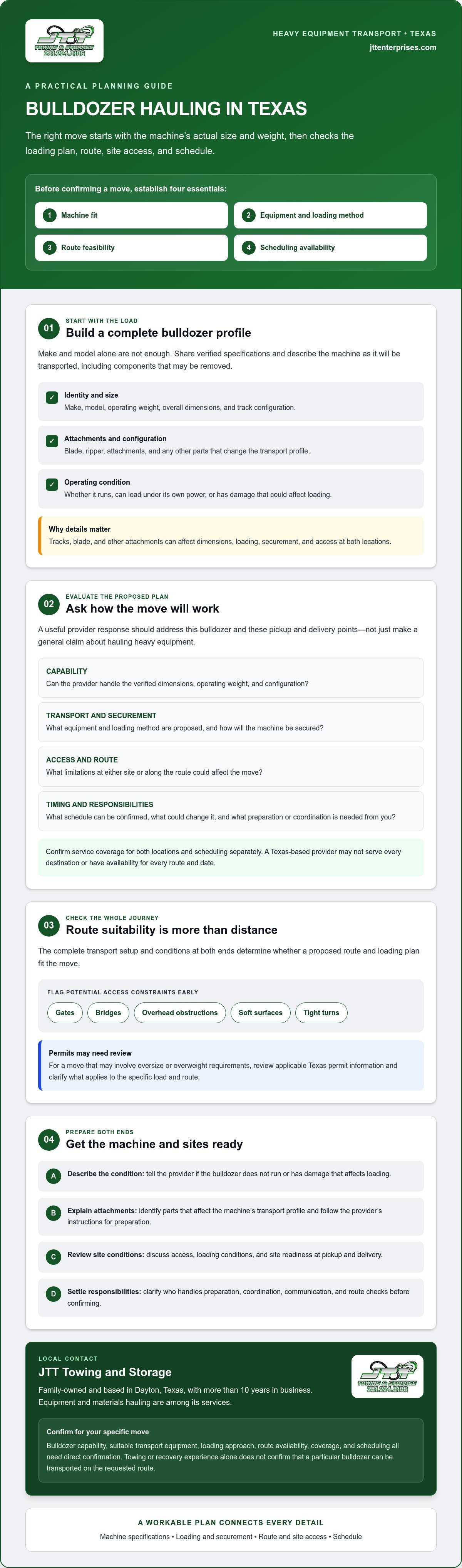
Before arranging a bulldozer hauling service Texas, get direct confirmation of four points: the machine’s fit, suitable transport equipment and loading method, route feasibility, and scheduling availability. A provider’s towing or recovery experience may be relevant, but it does not by itself confirm that a particular bulldozer can be transported on the requested route.
How to Evaluate a Texas Bulldozer Hauling Provider
A dependable provider should assess the actual bulldozer and move, not rely on a general claim that it handles heavy equipment. Share verified dimensions and operating weight, then ask whether those details fit the provider’s available transport equipment and loading approach. A useful response should also address securement, pickup access, the proposed route, and conditions at the delivery site.
Check service coverage and scheduling separately. A provider based in Texas may not serve every location or have availability for every route and date. Confirm that both pickup and destination are within its current service area, and ask what scheduling expectations apply. For a move that may involve oversize or overweight requirements, review the Texas oversize/overweight permits information and clarify with the provider what applies to the specific load and route.
Questions to ask before arranging the haul
Use the first conversation to establish whether the proposed move is workable at both ends. Have the machine details and exact pickup and delivery points ready. Ask direct questions about capability, access, timing, and preparation so you know what needs to be settled before dispatch.
- Can you handle this bulldozer’s verified dimensions, operating weight, and configuration?
- What transport equipment and loading method do you propose, and how will the machine be secured?
- What access limitations at pickup or delivery could affect the move?
- What schedule can you confirm, and what could change it?
- What documents, machine preparation, or site arrangements do you need from me?
Clarify what the arrangement includes and who is responsible for each preparation or coordination task. Resolve assumptions about site readiness, loading, communication, and route checks before confirming the job.
How to compare provider responses fairly
Compare the substance of each response, not broad assurances. A useful answer addresses your bulldozer’s specifications, the loading and securement plan, access at both locations, service coverage, and scheduling. If anything is unclear, ask for clarification before booking. Unconfirmed capacity or responsibilities can create avoidable problems during coordination.
JTT Towing and Storage is a family-owned business based in Dayton, with equipment and materials hauling among its services. For a local conversation about your requirements, you can review JTT’s hauling services, then confirm directly whether your bulldozer, route, and requested schedule fit its current capabilities.
Texas Route, Access, and Load Requirements to Confirm
A route that looks short on a map may still be unsuitable for a particular move. The bulldozer’s loaded dimensions and weight, transport setup, road conditions, and access at both locations all affect route planning. Share constraints early, then ask the provider to review the full trip rather than only the distance between pickup and delivery.
Describe the entrance and access roads, including narrow gates, soft or uneven ground, overhead obstacles, tight turns, bridges, and limited maneuvering space. Mention site hours and any restrictions on where a transport vehicle can load or unload. If possible, provide photos or measurements of challenging areas. Ask the provider to consider both the origin and destination, as well as the public-road portion of the route.
Match site details with provider questions
Use this checklist to turn site observations into practical questions. These details can help the provider assess access and identify anything that needs further review.
| Details to share | Question to ask the provider |
|---|---|
| Gate width, entrance layout, and turning space | Can the planned transport setup enter, maneuver, and exit safely? |
| Ground surface, slope, or soft areas | Could site conditions affect loading or unloading? |
| Overhead obstacles and bridge locations | How will clearances and route suitability be evaluated? |
| Site hours and loading-area limits | Does the schedule allow for the site’s access restrictions? |
Which Texas requirements need verification?
Don’t assume that a machine or transport configuration is exempt from requirements, or that a rule applies based on the bulldozer alone. The complete transport setup and planned route matter. Ask the provider what needs checking for your move, and verify applicable state requirements with the Texas Department of Transportation (TxDOT) or another qualified source. Confirm local access conditions with the relevant authority or site contact. Requirements can depend on the details, so use current guidance rather than relying on general statements.
Securement is another part of the plan. The Federal cargo securement rules provide official guidance to review with the carrier. Ask how the proposed securement approach applies to the machine and transport arrangement. For a bulldozer hauling service Texas customers can assess with confidence, get confirmation that route, site access, applicable requirements, and securement have all been considered before scheduling.
Prepare Your Bulldozer and Site Before Pickup
A clear handoff begins before the transport vehicle arrives. Confirm the machine details, pickup and delivery access, operating condition, and who is responsible for each part of the move. These checks give the provider a chance to assess the plan and help everyone understand what is ready and what still needs attention.
A practical pre-pickup checklist
Work through the details in order, and update the provider if anything changes. A new attachment or an access restriction, for example, could affect the agreed plan.
- Confirm specifications: Share the make, model, operating weight, dimensions, track configuration, and a list of attachments or loose components.
- Provide move details: Confirm the exact pickup and destination locations, site contacts, access limitations, and preferred timing.
- Describe condition: Disclose starting or operating concerns, known damage, leaks, and whether the bulldozer can move under its own power.
- Prepare both sites: Arrange clear, safe access for the transport vehicle and identify any gate, surface, turning, or loading-area constraints.
- Follow provider instructions: Ask before removing or securing attachments, and follow the agreed machine-preparation steps.
Document the bulldozer’s visible condition before pickup with written notes or photos for your records. Point out existing damage and explain any mechanical issue that could affect loading or movement. This creates a useful handoff reference and helps ensure relevant details are not missed.
What to confirm about loading and handoff
Before the move, agree who coordinates loading, securement, and unloading, and confirm what the arranged service includes. Identify who will be present at pickup and delivery, and make sure each person is authorized to release or receive the machine. Discuss these responsibilities rather than assuming they are included.
Set a clear communication plan. Ask who will contact you about arrival, delays, or changes, and provide a reliable contact for each site. Confirm the loading and securement approach with the responsible provider before pickup. Don’t improvise a method or change preparation steps without checking with them first.
These preparations make it easier to discuss a bulldozer hauling service Texas move with fewer unanswered questions. JTT Towing and Storage is a Dayton-based business that offers equipment and materials hauling. Discuss your bulldozer hauling requirements with JTT, and confirm directly whether the machine, route, and schedule fit its current capabilities.
Arrange Bulldozer Hauling Near Dayton with JTT
JTT Towing and Storage is a family-owned business based in Dayton, Texas, with more than 10 years in business. Equipment and materials hauling is among its services, making JTT a local contact for discussing a potential bulldozer move. That service category alone doesn’t confirm that a particular machine can be hauled. Confirm bulldozer-specific capability, the proposed route, and scheduling directly before making arrangements.
Coverage depends on the requested trip. Share the pickup and delivery locations, then ask whether both are within JTT’s current service area and whether the route and timing can be accommodated. JTT serves customers in the local area, including ZIP codes 77535, 77336, 77327, 77561, 77357, 77532, and 77575. Confirm current route coverage for your specific move rather than assuming a Dayton base means every nearby community or Texas destination is covered.
What information to provide when requesting hauling
Having the key details ready makes the first conversation more productive. Include:
- The bulldozer’s make, model, operating weight, dimensions, track configuration, and attachments.
- Whether it runs, can move under its own power, or has known damage or operating concerns.
- Exact pickup and delivery locations, site-access limitations, and requested timing.
- Any relevant loading-area restrictions, gate concerns, or route conditions you already know about.
Then ask JTT to confirm whether the specific machine and move fit its available service, equipment, route coverage, and schedule. If the transport plan depends on details that still need verification, clarify them before treating the move as arranged.
Discuss a local equipment move with JTT
For planning beyond a bulldozer-specific request, the related topics of heavy equipment hauling in Texas and heavy-duty towing in Dayton may help you distinguish planned equipment transport from a recovery or towing need. If the bulldozer is disabled or involved in an incident, explain that clearly so JTT can discuss whether its heavy-duty towing and recovery services are relevant. Don’t assume recovery and equipment hauling are interchangeable.
Gather your machine and route details, then contact JTT to discuss the job. Confirm current service coverage, bulldozer capability, loading arrangements, and scheduling for your requested move. A direct check is the practical next step toward finding out whether JTT can accommodate your requirements.
Plan Your Bulldozer Move with Clear Details
A well-planned move starts with accurate machine information and a provider who confirms the details rather than making assumptions. Have the bulldozer’s specifications and condition ready, share access constraints at both locations, and clarify the loading plan, route, responsibilities, and schedule before booking. These checks help you assess whether a bulldozer hauling service Texas provider can accommodate your specific move.
JTT Towing and Storage is a family-owned business based in Dayton, with more than 10 years in business and equipment and materials hauling among its services. Confirm bulldozer-specific capability, route coverage, and scheduling directly for your job.
Contact JTT to discuss your bulldozer hauling requirements and share the machine and destination details you’ve gathered. A clear conversation is a practical first step toward a better-prepared move.
Frequently Asked Questions
Can a regular towing service haul a bulldozer?
Not every towing service can transport a bulldozer. The machine’s operating weight, dimensions, attachments, condition, and loading needs must match the provider’s equipment and capabilities. Ask the provider to review the specific machine and confirm the loading, securement, route, and destination plan. A company’s towing or recovery services may be relevant, but they don’t automatically confirm it can handle a planned bulldozer move.
What information do I need to get a bulldozer hauling quote in Texas?
Provide the bulldozer’s make, model, operating weight, overall dimensions, track configuration, attachments, and condition. Include the exact pickup and delivery locations, access restrictions at both sites, and your requested timing. Explain whether the machine runs, can move under its own power, or has known damage. This information helps a bulldozer hauling service Texas provider assess whether the specific machine and route fit its capabilities.
Does a bulldozer hauling service in Texas need permits?
Permit requirements depend on the complete transport configuration and route, so don’t assume a permit is or isn’t needed based on the bulldozer alone. Ask the provider what needs verification for your move, then confirm applicable requirements with current Texas authorities or another qualified source. Share the machine and transport details early, since they’re necessary to assess whether route conditions or permits may affect the plan.
How do I know if a hauling provider can move my bulldozer?
Ask the provider to confirm capability using your bulldozer’s actual specifications, not a general statement about hauling heavy equipment. A useful response addresses machine fit, suitable transport equipment, loading and securement, route access, destination conditions, and scheduling. Confirm the provider has considered both pickup and delivery locations. Resolve unclear answers about capacity, responsibilities, or timing before booking so expectations are clear.
Can JTT Towing and Storage haul a bulldozer near Dayton, Texas?
JTT Towing and Storage is based in Dayton and lists equipment and materials hauling among its services, but its ability to haul a particular bulldozer needs direct confirmation. Ask about the machine, route, and requested schedule. For moves involving ZIP codes 77535, 77336, 77327, 77561, 77357, 77532, or 77575, confirm current route coverage with JTT rather than assuming service availability.
What should I do before a bulldozer is picked up for hauling?
Share accurate machine specifications, pickup and delivery details, access restrictions, and preferred timing. Tell the provider about attachments, loose components, leaks, damage, or operating concerns. Arrange clear access at both sites, document the machine’s visible condition, and confirm who will coordinate loading, securement, and unloading. Follow the provider’s instructions for preparing the bulldozer, and ensure authorized people can release and receive it.
Can a bulldozer be hauled if it is not running?
It may be possible, but the provider must assess the machine’s condition and confirm a suitable loading plan. Explain whether it starts, moves, or has mechanical damage, and describe any known issues that could affect handling. Don’t assume the same approach used for a running bulldozer will work. Ask the provider to verify the required equipment, site access, and responsibilities before arranging pickup.


